


You may also like
-
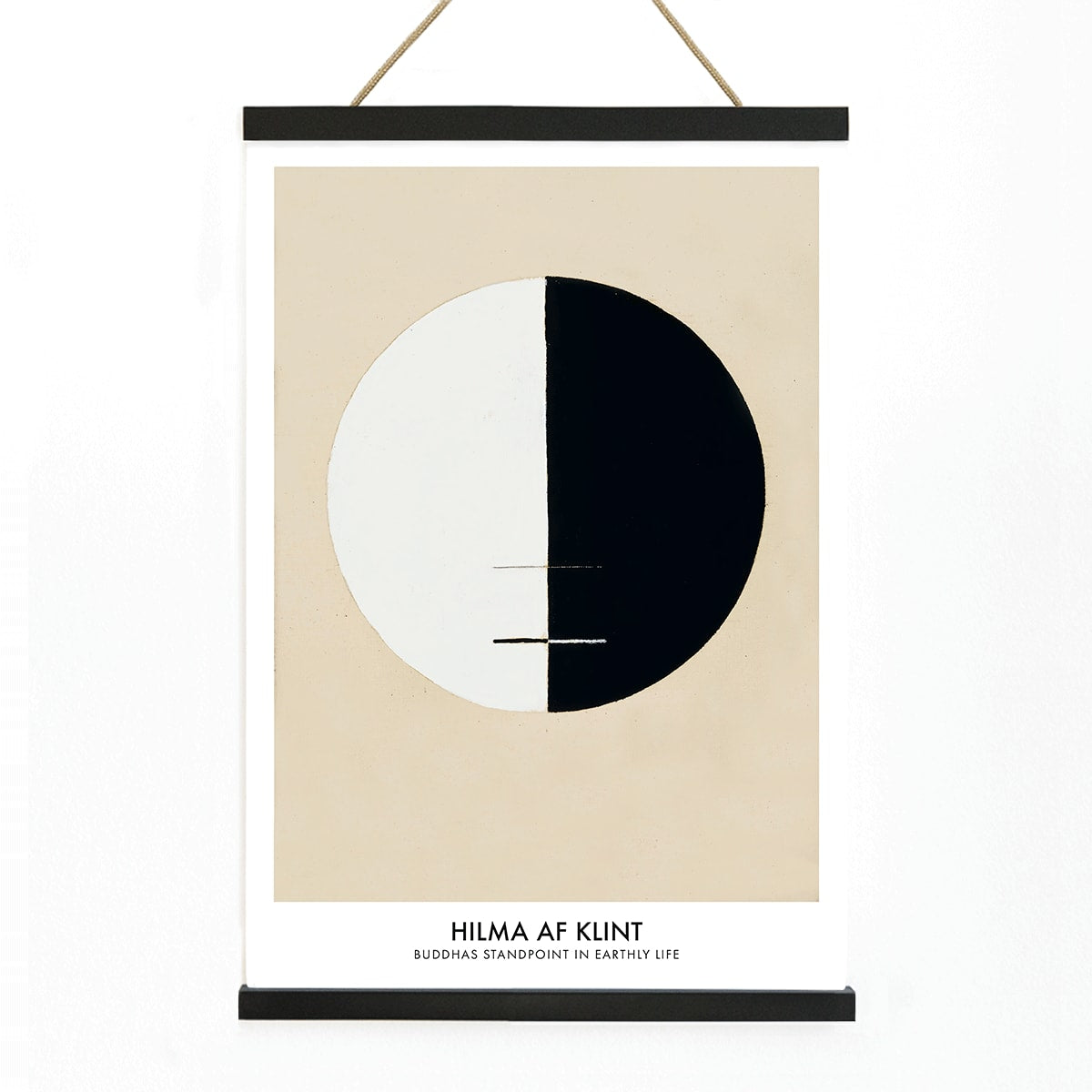
Buddha's Standpoint in the Earthly Life Poster
Hilma af Klint · 1917 · Meditative abstract art print centering Buddhist symbolism in a calm circular diagram
Poster from €9 · Framed from €16
Regular price From €6,00Regular price -
Judaism and Paganism Standpoint Poster
Hilma af Klint · 1920 · Mystical geometric art print with crisp black symbols balanced on a calm beige ground
Poster from €9 · Framed from €16
Regular price From €6,00Regular price -
The Current Standpoint of the Mahatmas Poster
Hilma Af Klint · 1920 · Geometric art print featuring circles and triangles in bold black and white symmetry
Poster from €9 · Framed from €16
Regular price From €6,00Regular price -
Doves No. 2 Poster
Hilma af Klint · 1915 · Lyrical abstract art print with dove symbolism and pastel-toned geometric forms
Poster from €9 · Framed from €16
Regular price From €6,00Regular price


-

"Very nice Posters. The quality is amazing and we received it very quickly !"
-

"A shop to visit absolutely. Huge selection of posters. We spent more than an hour there !"
-

"Perfect to find gift. Price are very good. An they can frame and pack it on site"


About the Artist
Hilma af Klint was a pioneering Swedish painter whose abstract works predated the mainstream acceptance of abstraction in European modernism. Deeply influenced by spiritualism and theosophy, she sought to express metaphysical concepts through symbolic forms and geometric language. Today, she is celebrated as a visionary among famous artists who redefined the possibilities of modern art and inspired generations of abstract painters.
Her legacy resonates with those drawn to the intersection of art, spirituality, and innovation, where personal insight and universal symbolism converge.
The Artwork
Painted in 1921, Buddha Standpoint In Early Life reflects af Klint’s commitment to visualizing spiritual ideas rather than depicting physical reality. This work was part of her larger series exploring the evolution of consciousness, using simplified forms to represent stages of inner development. The title alludes to a foundational moment of awareness, encouraging contemplation of beginnings, balance, and the dualities present in early life.
Rather than telling a narrative, the piece serves as a meditative diagram—an invitation to pause and reflect on the nature of spiritual growth.
Style & Characteristics
The artwork features a large circle precisely divided into black and white halves, set against a warm beige background. The restrained palette and sharp geometric division create a striking sense of clarity and equilibrium. The smooth, clean edges and absence of visible brushwork emphasize proportion and symmetry, giving the piece a minimalist, almost emblematic quality.
This serene composition stands out among black and white posters and abstract art prints, offering a quiet yet powerful visual presence.
In Interior Design
This fine art print brings calm structure to living rooms, meditation spaces, or bedrooms seeking a sense of order and tranquility. The beige background complements natural materials like wood, linen, and stone, while the bold black and white motif integrates seamlessly with modern or minimalist decor.
It is well-suited to Japandi and contemporary interiors, and also enhances curated esoteric wall art arrangements. Its centered composition provides a visual anchor, making it ideal for balancing more dynamic pieces in a gallery wall.