


You may also like
-
Balsam Tree Poster
Mark Catesby · 1754 · Graceful balsam tree print with soft pink blossoms and crisp natural history detail
Poster from €9 · Framed from €16
Regular price From €6,00Regular price -
Laurel Tree Poster
Mark Catesby · 1754 · Elegant laurel botanical print with slender branch, glossy leaves, and delicate blooms
Poster from €9 · Framed from €16
Regular price From €6,00Regular price -
Magnolia altissima Poster
Mark Catesby · 1754 · Elegant magnolia botanical print with glossy green leaves and creamy white bloom
Poster from €9 · Framed from €16
Regular price From €6,00Regular price -
Rhododendron Poster
Joseph Dalton Hooker · 1849 · Refined rhododendron print with white blossoms and crisp botanical linework
Poster from €9 · Framed from €16
Regular price From €6,00Regular price


-

"Very nice Posters. The quality is amazing and we received it very quickly !"
-

"A shop to visit absolutely. Huge selection of posters. We spent more than an hour there !"
-

"Perfect to find gift. Price are very good. An they can frame and pack it on site"


About the Artist
Walter Hood Fitch was one of the most influential botanical illustrators of the Victorian era, celebrated for turning scientific observation into elegant, readable images. Working closely with leading botanists, he helped shape how new plant discoveries were recorded and shared through books and journals.
His plates balance accuracy with visual clarity, which is why a Fitch botanical print still feels fresh as wall art today, especially for collectors of botanical posters and prints and classic natural history decor.
The Artwork
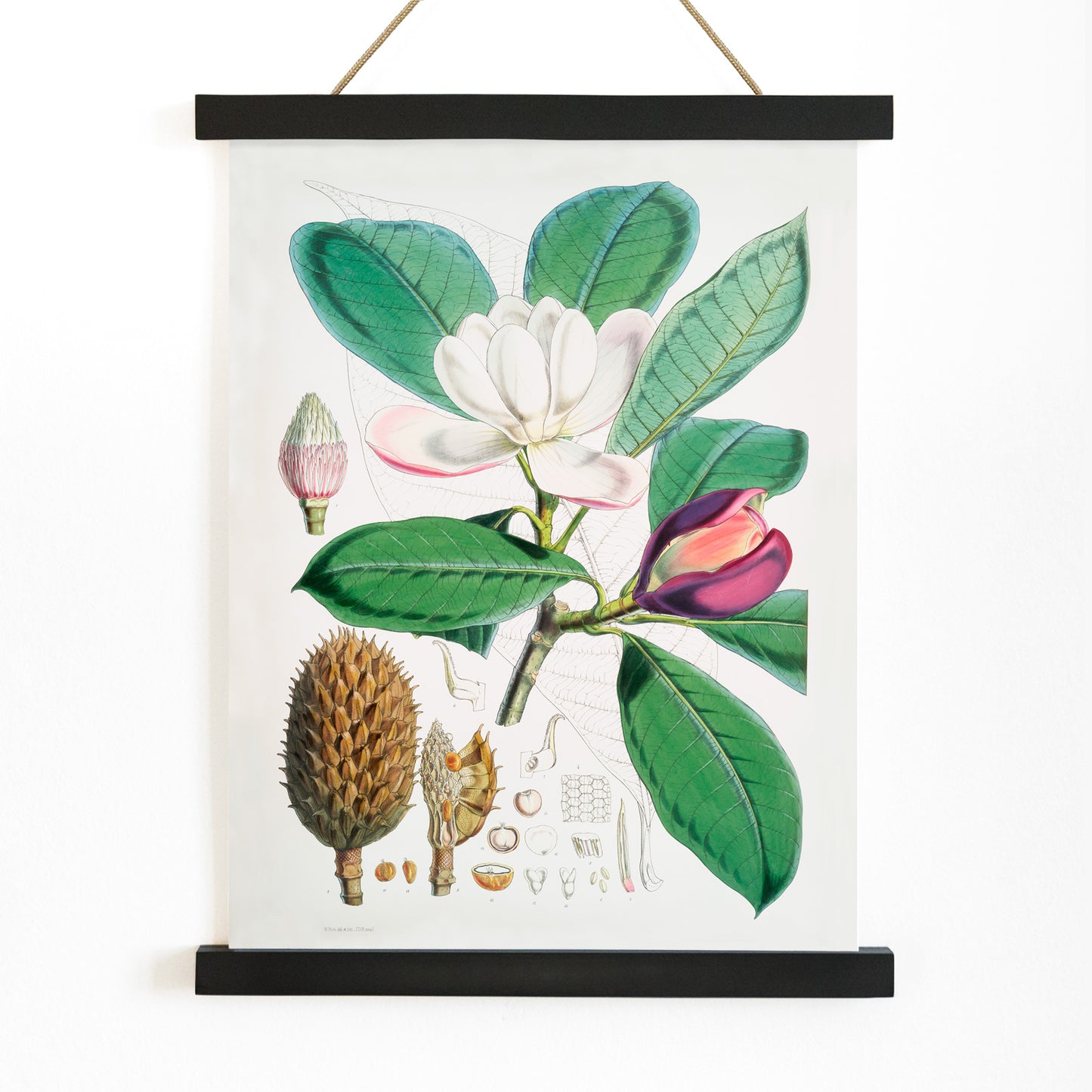
Talauma Hodgsoni reflects the nineteenth-century drive to catalogue global flora, when Himalayan species were being introduced to European science and horticulture. This illustration was created as part of the Victorian passion for documenting and understanding exotic plants, serving both scientific and educational purposes. By presenting the magnolia relative in meticulous detail, Fitch contributed to the wider dissemination of botanical knowledge during an era of exploration and discovery.
As a vintage print, it embodies the era’s dedication to careful observation and the sharing of new botanical findings. This work stands as a testament to the curiosity and precision that defined Victorian botanical illustration, bridging the worlds of science and art.
Style & Characteristics
This botanical illustration is composed like a specimen on the page, with the main stem set centrally and additional details isolated for close study. Fine linework and controlled shading model the form without drama, keeping the focus on structure and proportion.
The palette reads as natural and calming, with deep greens in the foliage, creamy white in the blossom, and earthy browns in the plant parts, creating a quiet, museum-like mood. For fans of green tone wall decor, it offers harmony without feeling flat.
In Interior Design
As a vintage botanical print for living room or bedroom, Talauma Hodgsoni pairs beautifully with oak, walnut, linen, and stone, bringing an organic accent to both modern and traditional spaces. It also works well in a study, hallway, or kitchen where you want quiet sophistication rather than bold graphics.
Style it as a single statement piece or as part of a gallery wall with other science inspired prints. Soft whites, muted purples, and warm neutrals in surrounding textiles will echo the illustration and make the fine art print feel intentionally curated.