


You may also like
-
Pilchard Poster
Mark Catesby · 1754 · Natural history pilchard vintage print pairing a silvery fish with coastal greenery
Poster from €9 · Framed from €16
Regular price From €6,00Regular price -
Blue Tail Lizard Poster
Mark Catesby · 1754 · Lively natural history print of a lizard with vivid blue tail and poised stance
Poster from €9 · Framed from €16
Regular price From €6,00Regular price -
Balsam Tree Poster
Mark Catesby · 1754 · Graceful balsam tree print with soft pink blossoms and crisp natural history detail
Poster from €9 · Framed from €16
Regular price From €6,00Regular price -
Green Lizard Poster
Mark Catesby · 1754 · Natural history vintage print featuring a green lizard poised among leafy branches
Poster from €9 · Framed from €16
Regular price From €6,00Regular price


-

"Very nice Posters. The quality is amazing and we received it very quickly !"
-

"A shop to visit absolutely. Huge selection of posters. We spent more than an hour there !"
-

"Perfect to find gift. Price are very good. An they can frame and pack it on site"


About the Artist
Mark Catesby was an English naturalist and illustrator whose pioneering work in the early eighteenth century shaped European understanding of North American flora and fauna. Through extensive fieldwork and meticulous illustration, Catesby documented species new to European audiences, blending scientific observation with an artist’s sensitivity. His influential volumes set a standard for natural history illustration and inspired generations of botanical artists.
Collectors interested in classic natural history wall art often combine Catesby’s works with other famous artist prints or explore science illustrations for a thoughtfully curated gallery wall.
The Artwork
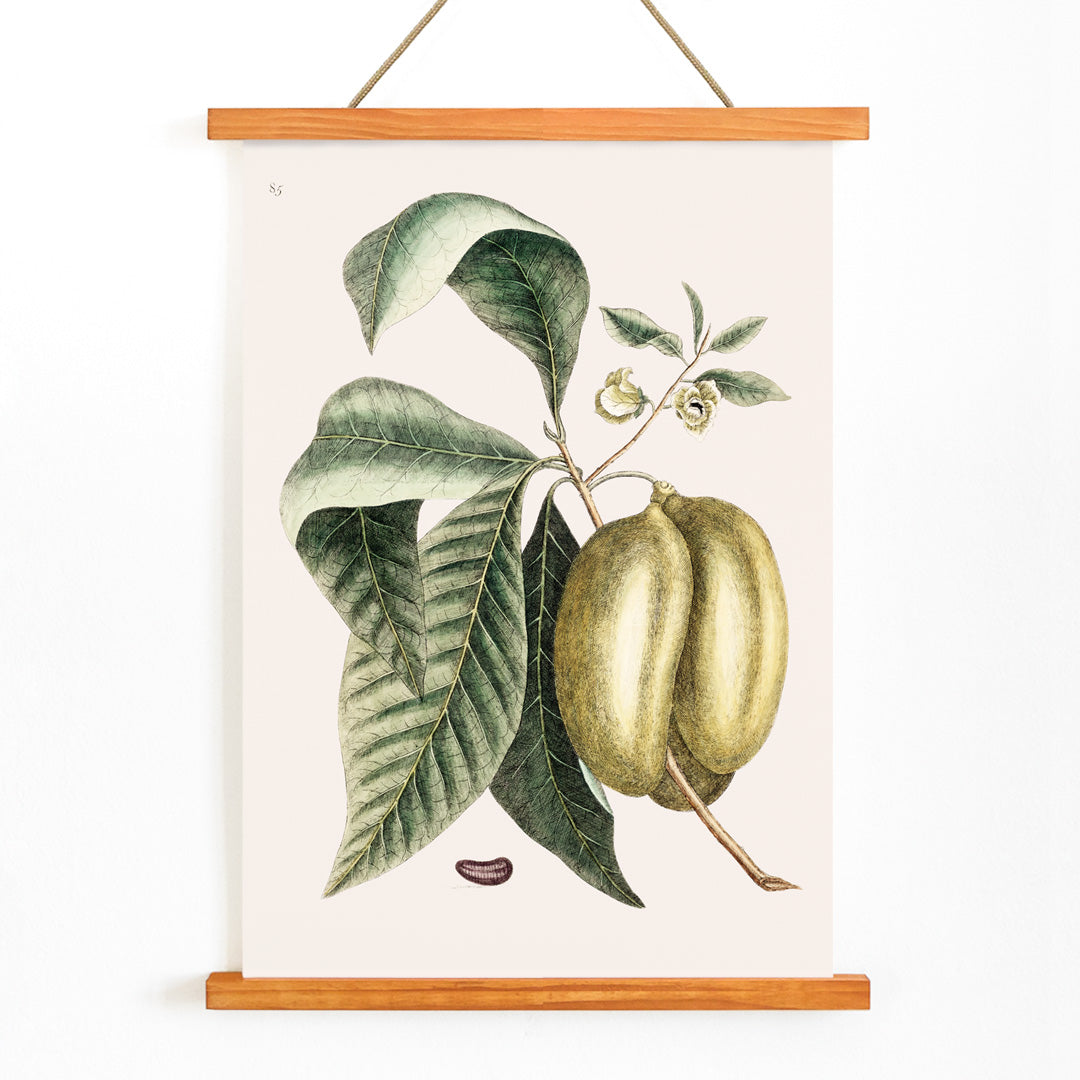
This depiction of the pawpaw was created during a time when botanical illustration played a vital role in cataloguing the unfamiliar plants of the Americas. For eighteenth-century readers, such images were more than decorative—they were essential tools for study and identification, bridging the worlds of science, commerce, and curiosity. The pawpaw, a native fruit tree, was both a botanical novelty and a symbol of the rich biodiversity encountered by explorers in the New World.
As a vintage botanical print, this piece reflects the era’s fascination with discovery and the desire to bring distant landscapes into the domestic sphere through printed compendiums.
Style & Characteristics
The artwork features a single, upright stem with elongated, smooth-edged green leaves and several oval, ripening fruits rendered with naturalistic detail. Set against a pale, unadorned background, the composition emphasizes clarity and scientific accuracy, characteristic of Catesby’s approach. Fine linework and subtle gradations of color create a sense of volume and life without embellishment.
The palette is dominated by greens, with accents of yellow and muted brown in the fruit, lending the print a serene, organic quality. This understated elegance allows it to blend seamlessly with both traditional and modern interiors, and it pairs especially well with other botanical prints.
In Interior Design
This botanical print is well suited for kitchens, breakfast nooks, or dining areas, where its depiction of fruit feels especially appropriate. In a study or home office, it introduces a scholarly, natural touch that complements wood, leather, and linen textures. Framing in natural oak or slim black enhances the artwork’s crisp presentation.
To create a harmonious space, echo the leafy greens with ceramics or textiles, or build a soft palette around green wall art and warm neutrals for a cohesive gallery display.