


You may also like
-
Acanthus mollis Poster
Karl Blossfeldt · 1928 · Sculptural acanthus print with sharp monochrome detail and museum like calm
Poster from €9 · Framed from €16
Regular price From €6,00Regular price -
Flowers Poster 2 Poster
Karl Blossfeldt · 1928 · Sculptural plant study print in crisp black and white with modernist clarity
Poster from €9 · Framed from €16
Regular price From €6,00Regular price -
Cirsium Canum Poster
Karl Blossfeldt · 1928 · Stark thistle print with sculptural botanical forms in crisp black and white
Poster from €9 · Framed from €16
Regular price From €6,00Regular price -
Asclepias Syriaca Poster
Karl Blossfeldt · 1928 · Sculptural black-and-white milkweed print highlighting geometric buds against a clean studio background
Poster from €9 · Framed from €16
Regular price From €6,00Regular price


-

"Very nice Posters. The quality is amazing and we received it very quickly !"
-

"A shop to visit absolutely. Huge selection of posters. We spent more than an hour there !"
-

"Perfect to find gift. Price are very good. An they can frame and pack it on site"


About the Artist
Karl Blossfeldt was a German photographer and educator whose pioneering plant portraits shaped the aesthetics of early modern photography. Influenced by the New Objectivity movement, he approached natural forms with the analytical eye of a sculptor or architect, seeking to reveal the inherent design principles within nature.
His landmark 1928 portfolio showcased plants as models for artists and designers, emphasizing their structural beauty and educational value. Blossfeldt’s legacy endures among admirers of fine art photography prints and those drawn to the intersection of nature and design.
The Artwork
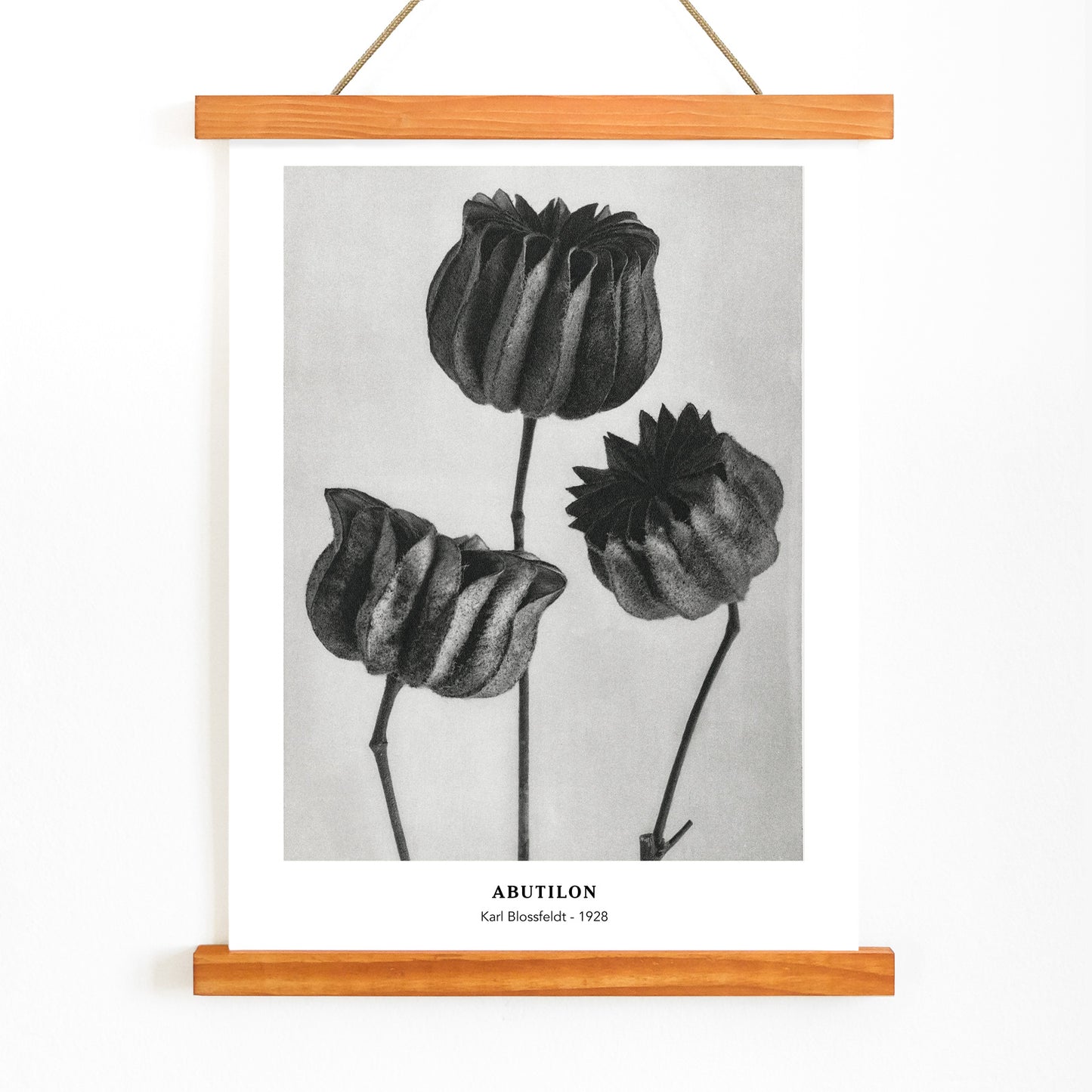
Abutilon was created during a period of intense interest in the relationship between art, science, and the natural world. Blossfeldt’s intention was to demonstrate how even the most modest botanical specimens could inspire new ways of seeing and thinking about form. His photographs were originally used as teaching tools, encouraging students to observe and learn from the elegant solutions found in nature’s architecture.
This image embodies the modernist belief that beauty and function coexist in the organic world, offering a bridge between scientific observation and artistic inspiration. Today, it stands as both a historical document and a timeless meditation on structure and simplicity, connecting viewers to the era’s fascination with natural forms.
Style & Characteristics
The photograph is rendered in sharp black-and-white, with silvery greys and deep blacks accentuating the Abutilon pod’s ribbed geometry. The clean, uncluttered background isolates the subject, lending the composition a sense of clarity and focus reminiscent of scientific illustration.
Blossfeldt’s precise use of lighting and focus brings out the pod’s surface texture and subtle shadowing, giving it a sculptural, almost monumental presence. The overall mood is contemplative and analytical, appealing to enthusiasts of black-and-white wall decor and minimalist photographic art.
In Interior Design
This botanical print is well-suited to living rooms, offices, hallways, or bedrooms where a refined yet understated focal point is desired. It complements modern, Scandinavian, Japandi, and industrial interiors, especially when incorporated into a monochrome gallery wall.
Pair it with white walls, grey textiles, pale woods, or matte black accents for a harmonious effect, and consider a simple frame from the frames collection for a museum-quality presentation. Its timeless appeal makes it a favorite among nature lovers and design enthusiasts alike.