


You may also like
-

Japanese woman Poster
Utagawa Kuniyoshi · 1831 · Elegant ukiyo-e vintage print of a kimono-clad woman in cool blue tones
Poster from €9 · Framed from €16
-

Japanese woman 2 Poster
Utagawa Kuniyoshi · 1829 · Elegant ukiyo-e art print of a kimono-clad woman in cool blue and white
Poster from €9 · Framed from €16
-

Mimasu Gennosuke Poster
Utagawa Kuniyoshi · 1830 · Dramatic kabuki warrior art print with bold patterns and vivid red accents
Poster from €9 · Framed from €16
-

Black Cat 4 Poster
Unknown artist · 1750 · Striking black cat vintage print with bold silhouette on warm beige ground
Poster from €9 · Framed from €16


-

"Very nice Posters. The quality is amazing and we received it very quickly !"
-

"A shop to visit absolutely. Huge selection of posters. We spent more than an hour there !"
-

"Perfect to find gift. Price are very good. An they can frame and pack it on site"


About the Artist
Utagawa Kuniyoshi (1797–1861) was a leading figure in late Edo-period ukiyo-e, renowned for his inventive approach to woodblock printing. As a member of the influential Utagawa school, he gained acclaim for his dynamic warrior prints, satirical works, and his ability to infuse everyday subjects with humor and vitality.
Kuniyoshi's fascination with animals, especially cats, reflected both his technical mastery and his playful spirit. His cat prints became beloved examples of how Japanese graphic art could blend observation, wit, and popular appeal, making them enduring favorites among collectors and art lovers.
The Artwork
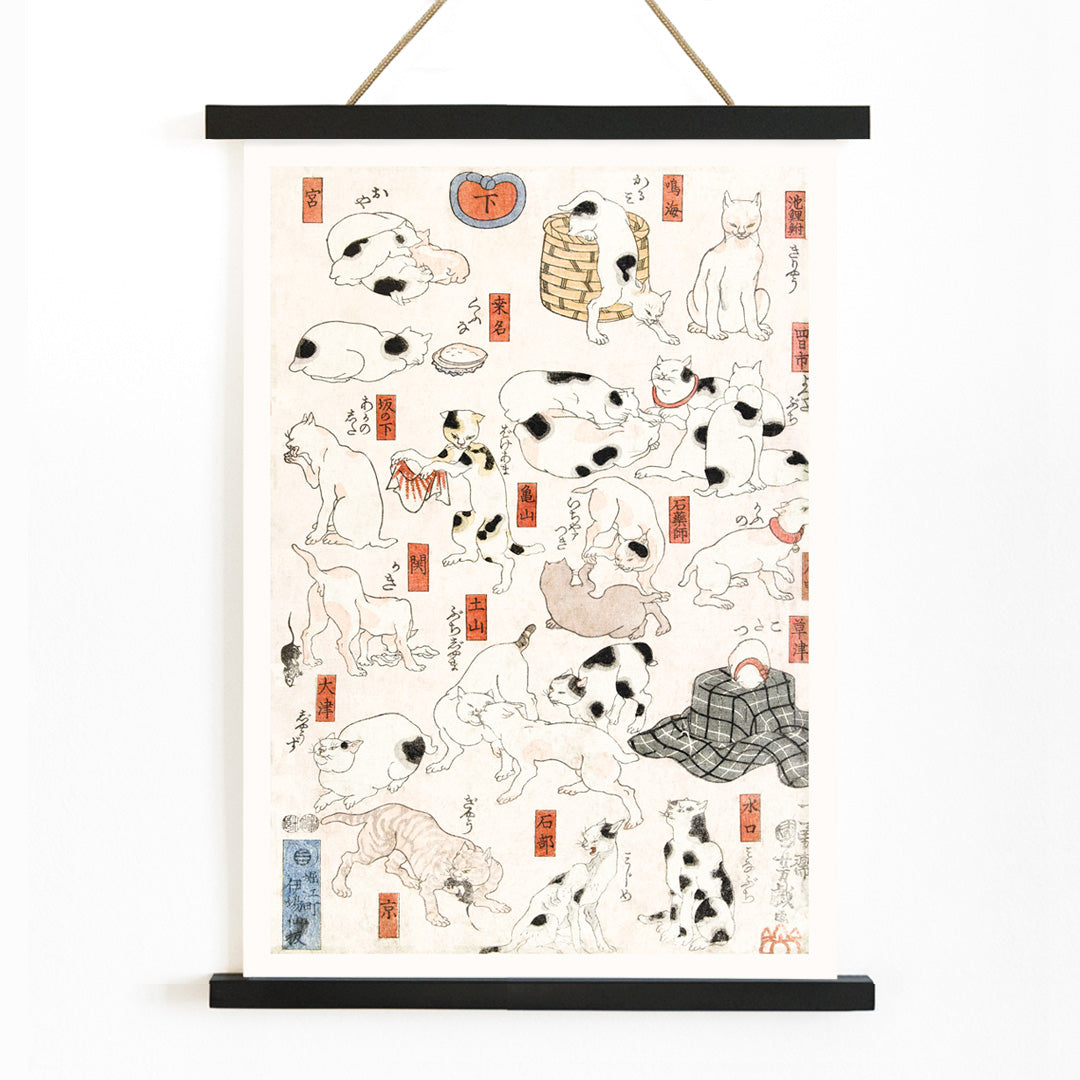
Produced in 1849, this sheet of cat studies comes from a time when ukiyo-e prints were accessible art for urban households in Edo. Cats were cherished companions and frequent muses for artists, often serving as symbols of personality and domestic life. This work was likely intended as both a decorative piece and a source of amusement, capturing the everyday charm of feline behavior.
Rather than telling a single story, the print offers a lively survey of cat postures and expressions, inviting viewers to appreciate the individuality of each animal. It exemplifies the playful and approachable side of ukiyo-e, a quality that continues to resonate with admirers of Japanese prints and historical animal art.
Style & Characteristics
The composition features a series of cat sketches arranged across the page, each rendered with crisp black ink outlines that emphasize their unique poses. The off-white background and subtle red accents lend the print a clean, graphic quality, while the careful spacing allows each figure to stand out.
The overall mood is lighthearted and whimsical, with the artist’s keen eye for gesture and expression shining through. This vintage print appeals to those who appreciate animal art and the refined simplicity of classic Japanese design.
In Interior Design
This art print brings a touch of wit and elegance to interiors, making it a charming addition to entryways, reading nooks, kitchens, or home offices. Its orderly arrangement and restrained palette allow it to complement a variety of decor styles, from minimalist to eclectic.
Pair it with natural materials and subtle color accents for a harmonious look, or display it alongside other black and white prints for a cohesive gallery wall that highlights its Edo-period character.