


You may also like
-

Different strokes for different folks Poster
McRay Magleby · 1942 · Playful geometric poster celebrating individuality with bright mid-century color blocks
Poster from €9 · Framed from €16
-

Bauhaus Poster 1 Poster
MORYARTY · 1923 · Geometric Bauhaus poster with layered shapes and bold modernist color contrasts
Poster from €9 · Framed from €16
-

Bauhaus poster 15 Poster
MORYARTY · 1926 · Geometric Bauhaus poster balancing circles and bold color blocks on clean white space
Poster from €9 · Framed from €16
-

The cover show Poster
Jeff Smith · 1983 · Playful poster of a man in a red hat absorbed in a magazine
Poster from €9 · Framed from €16


-

"Very nice Posters. The quality is amazing and we received it very quickly !"
-

"A shop to visit absolutely. Huge selection of posters. We spent more than an hour there !"
-

"Perfect to find gift. Price are very good. An they can frame and pack it on site"


About the Artist
Michael Mabry is an American graphic designer and educator known for transforming visual limitations into compelling, idea-driven works. As a prominent figure in late 20th-century design, Mabry contributed to the evolution of poster art through his teaching, publishing, and leadership within organizations like AIGA. His influence helped elevate posters from functional announcements to collectible pieces of art, valued by both design professionals and collectors.
The Artwork
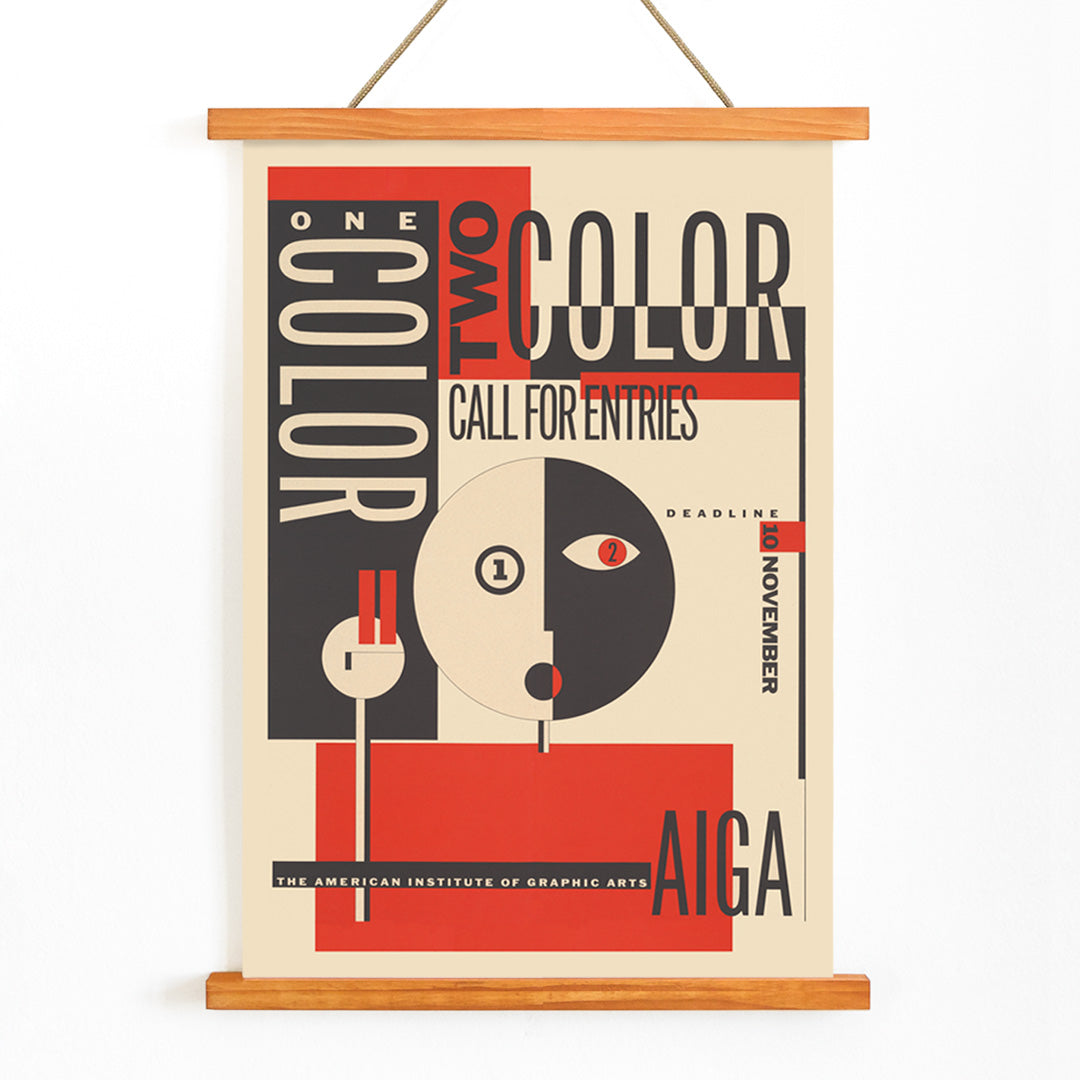
Created in 1987, One color reflects a period when graphic designers embraced the poster as a medium for conceptual exploration. The work’s premise—a strict limitation to a single dominant color—demonstrates how creative constraints can inspire bold visual solutions. During the late 1980s, such experiments paralleled a broader movement toward clarity and impact in visual communication, particularly within cultural and design circles.
This piece stands as an example of how a simple design decision can shape an entire composition, making the history and process of graphic design tangible for contemporary viewers.
Style & Characteristics
The poster features a striking geometric composition, anchored by a large red form set against a beige background. Black typography and accents introduce sharp contrast and structure, while the overall layout feels precise and architectural. The limited palette is used with intention, creating a sense of focus and visual authority that recalls both modernist and minimalist traditions.
This work fits seamlessly with abstract wall art and minimalist posters, offering a mood that is both energetic and composed.
In Interior Design
This poster art print is well-suited for modern interiors that benefit from a single, bold visual statement. Its red, beige, and black palette can complement accent pieces in a living room, office, or hallway, bringing cohesion and a sense of design intent to the space. Framed simply, it integrates easily into gallery walls or as a standalone feature.
For those drawn to geometric and design-forward decor, it pairs naturally with Bauhaus wall art and similar contemporary pieces.