


You may also like
-

Crimson topaz Poster
James Bolton · 1768 · Delicate natural history print pairing a crimson hummingbird with shells, butterflies, and cyclamen
Poster from €9 · Framed from €16
-

Caesalpinoid Poster
James Bolton · 1768 · Delicate natural history print with butterfly, beetles, and shells on cream
Poster from €9 · Framed from €16
-

Fragaria Poster
Amanda Almira Newton · 1912 · Detailed strawberry botanical print with ripe fruit and leafy stems on white
Poster from €9 · Framed from €16
-

Strawberry chromolithograph Poster
Abraham Jacobus Wendel · 1879 · Vivid strawberry print with crisp botanical detail and ripe fruit presence
Poster from €9 · Framed from €16


-

"Very nice Posters. The quality is amazing and we received it very quickly !"
-

"A shop to visit absolutely. Huge selection of posters. We spent more than an hour there !"
-

"Perfect to find gift. Price are very good. An they can frame and pack it on site"


About the Artist
James Bolton was an English naturalist and illustrator active in the late eighteenth century, a time when scientific exploration and artistic skill were closely intertwined. His work contributed to the Enlightenment’s drive for cataloguing the natural world, providing accurate visual records for both scholars and collectors.
Bolton was part of a generation of British natural history artists whose illustrations bridged the worlds of science and domestic appreciation. His legacy endures in the way his prints continue to serve as both educational references and refined decorative art, resonating with those who value vintage bird illustrations.
The Artwork
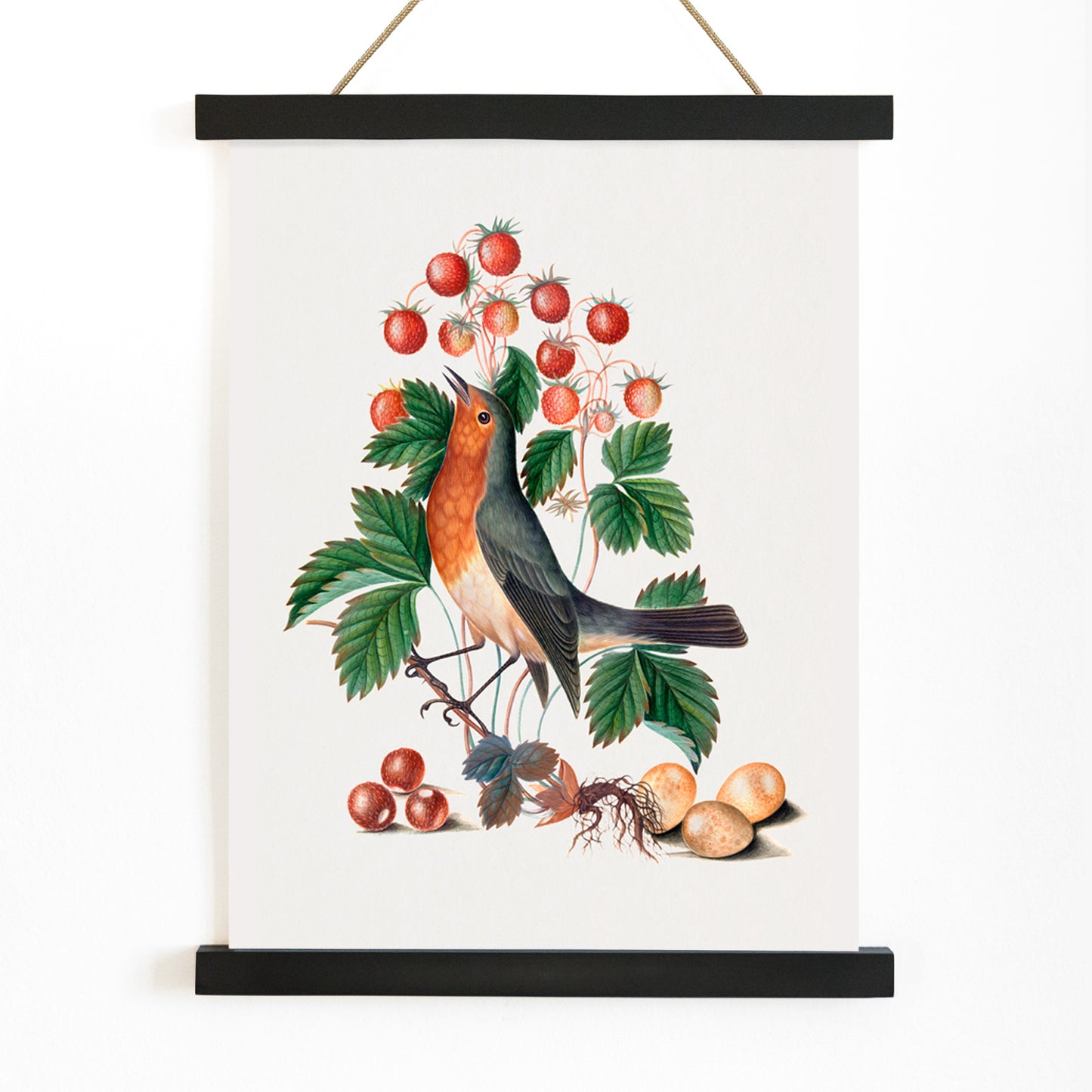
This 1768 plate was created during a period when natural history publications aimed to bring the wonders of the outdoors into the home. The European robin, a beloved garden bird, is depicted alongside wild strawberry, reflecting the Enlightenment belief that careful observation of familiar species could foster a deeper understanding of nature’s harmony.
Such works were intended for readers and collectors who sought trustworthy visual knowledge, whether for study, curiosity cabinets, or quiet enjoyment. The print’s enduring charm lies in its ability to transform scientific observation into a gentle, timeless narrative that still appeals today.
Style & Characteristics
The composition centers a single robin perched among strawberry leaves, blossoms, and fruit, rendered against a plain background. Fine linework and subtle shading give the bird a sense of volume, while the botanical elements remain crisp and detailed, characteristic of eighteenth-century natural history prints.
The robin’s warm red-orange breast contrasts with lively greens and touches of white and red in the strawberry plant. The overall effect is bright, gentle, and precise, making this vintage print ideal for those seeking a harmonious blend of botanical and bird illustration in natural tones.
In Interior Design
This fine art print brings a serene touch of nature to kitchens, studies, bedrooms, or any space where a calm, inviting atmosphere is desired. It complements light woods, linen, and both modern and cottage-inspired interiors, working well as a standalone piece or within a gallery wall arrangement.
Pair it with ceramics or textiles in leafy greens, and use small accents of robin red for cohesion. It layers beautifully with botanical wall art, vintage animal prints, and simple frames for a thoughtfully curated look.