


You may also like
-

American Swan Poster
John James Audubon · 1827 · Graceful swan print gliding among water lilies with crisp natural history detail
Poster from €9 · Framed from €16
-

American Scoter Duck Poster
John James Audubon · 1827 · Striking sea duck print with glossy black plumage and a yellow bill
Poster from €9 · Framed from €16
-

Le Flammant Poster
Edouard Travies · 1853 · Elegant flamingo vintage print with soft grey water and coral accents
Poster from €9 · Framed from €16
-

Three Flamingos Poster
August Allebé · 1878 · Graceful flamingo poster with three birds poised by water amid soft greenery
Poster from €9 · Framed from €16


-

"Very nice Posters. The quality is amazing and we received it very quickly !"
-

"A shop to visit absolutely. Huge selection of posters. We spent more than an hour there !"
-

"Perfect to find gift. Price are very good. An they can frame and pack it on site"


About the Artist
John James Audubon was a Franco American naturalist and artist whose groundbreaking bird portraits transformed nineteenth century wildlife illustration. His monumental work, Birds of America, published from 1827, set new standards for scientific accuracy and artistic drama, blending meticulous field observation with refined printmaking techniques.
Audubon's legacy endures among collectors of famous artist prints and classic art wall decor. His illustrations continue to bridge the worlds of science and decorative art, offering timeless appeal for those interested in both ornithology and elegant interior design.
The Artwork
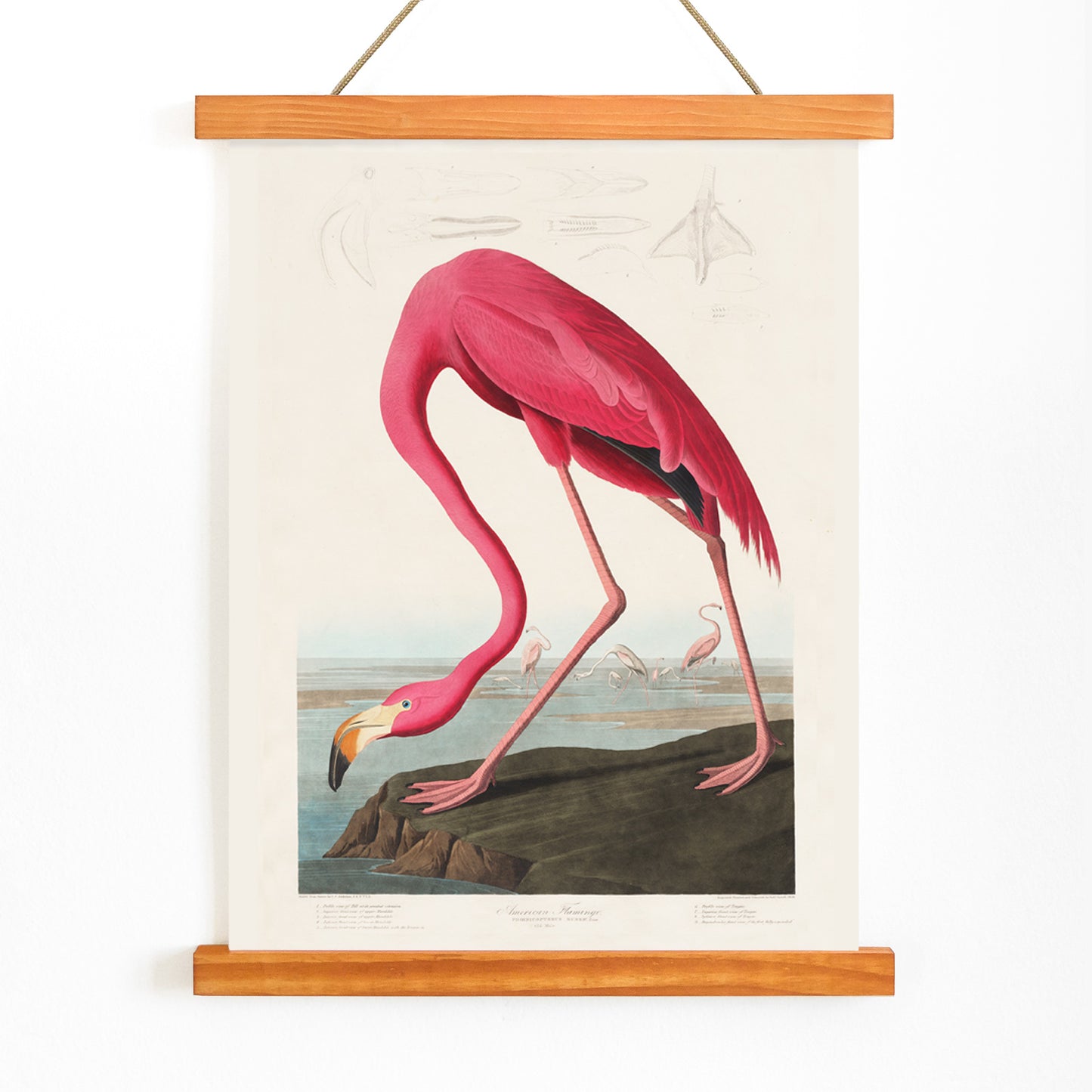
Created during the first release of Birds of America in 1827, this depiction of the Pink Flamingo reflects a period when illustrated plates were essential for sharing natural history discoveries. Audubon sought to portray birds as dynamic, living beings, encouraging viewers to consider their natural habitats and behaviors.
The flamingo, a symbol of distant wetlands and migration, was chosen for its rarity and striking appearance. This vintage print embodies the spirit of early nineteenth century exploration, when new species were introduced to the public through art and publishing, enriching parlors, libraries, and museum collections.
Style & Characteristics
The composition features a solitary flamingo, elegantly posed with its neck curved downward as it feeds. The bird's elongated form and delicate stance are rendered with precise contour lines and subtle shading, giving the plumage a sense of volume and lightness.
Dominated by shades of pink—ranging from blush to deeper rose—the palette is set against a crisp white background, with accents of brown and black at the beak and legs. The restrained, open setting emphasizes calm and clarity, making this a distinguished animal print that balances scientific detail with artistic grace.
In Interior Design
This Audubon print brings a refined focal point to living rooms, bedrooms, or offices, especially where a touch of historical depth is desired. Its vertical format suits narrow walls, reading nooks, and entryways, pairing well with light woods, brass, and linen textures.
For a harmonious palette, combine it with warm whites, beige, and pale oak, or echo the pink tones through ceramics or textiles. It complements both coastal and classic interiors, and pairs beautifully with botanical prints for a curated, nature-inspired arrangement.