


You may also like
-
Vintage floral patterns Poster
E. A. Séguy · 1925 · Art Deco floral pattern poster with jewel-toned motifs arranged in a neat grid
Poster from €9 · Framed from €16
Regular price From €6,00Regular price -
Geometric floral motifs 8 Poster
Édouard Bénédictus · 1928 · Art Deco floral poster featuring bold blossoms and geometric color blocks
Poster from €9 · Framed from €16
Regular price From €6,00Regular price -
Tropical Flowers II Poster
Unknown artist · 1912 · Decorative tropical flower print with stylized foliage and warm early modern pattern rhythm
Poster from €9 · Framed from €16
Regular price From €6,00Regular price -
Floral motifs 15 Poster
Édouard Bénédictus · 1928 · Lively Art Deco floral poster with stylized petals and rhythmic color blocks
Poster from €9 · Framed from €16
Regular price From €6,00Regular price


-

"Very nice Posters. The quality is amazing and we received it very quickly !"
-

"A shop to visit absolutely. Huge selection of posters. We spent more than an hour there !"
-

"Perfect to find gift. Price are very good. An they can frame and pack it on site"


About the Artist
E. A. Séguy was a French designer and illustrator renowned for his ability to translate the beauty of the natural world into striking decorative art during the early twentieth century. Séguy worked at the intersection of Art Deco and botanical illustration, producing pattern plates that inspired both artists and manufacturers of his era.
His contributions are admired for their disciplined ornamentation, rhythmic symmetry, and innovative approach to surface design. Today, Séguy is considered a significant figure in the history of classic art and decorative arts, with his works collected and exhibited alongside other masters of the period.
The Artwork
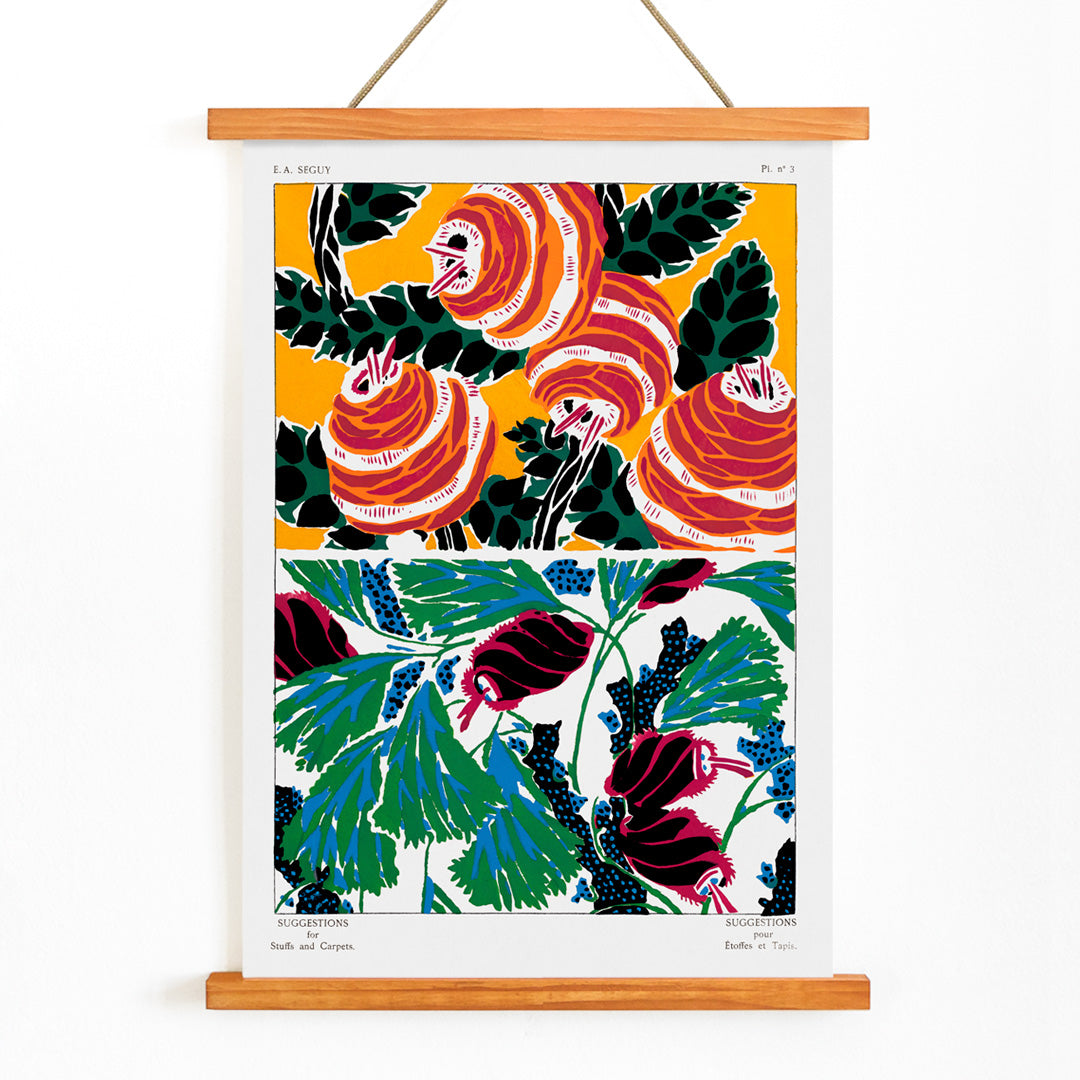
This 1925 composition was created during a period when decorative pattern was recognized as a modern artistic language, integral to textiles, wallpaper, and interior design. Séguy’s approach was to offer a repertoire of motifs that could be adapted and repeated, bridging the worlds of fine art and applied arts.
Reflecting the Art Deco fascination with order and stylization, this piece serves as both a design reference and a historic document of how botanical forms were reimagined for modern interiors. It remains a testament to the era’s creative synthesis of nature and geometry, making it a compelling addition to a collection of botanical inspired prints.
Style & Characteristics
The artwork features a series of distinct floral pattern panels, each resembling a decorative tile within a larger atlas. Stylized flowers and leaves are rendered with crisp outlines and repetitive forms, creating a rhythmic visual flow across the composition.
The color palette is bold and saturated, with warm oranges, reds, and yellows balanced by cool greens and blues, all unified by strong dark outlines. The overall effect is lively and graphic, giving this fine art print a vintage yet contemporary feel, especially in interiors that highlight orange and green tones.
In Interior Design
This Art Deco floral poster makes a striking statement in living rooms, studios, or dining areas where pattern can enliven the space. Its modular design is ideal for gallery walls and pairs well with geometric abstracts or other vintage print plates.
For interior styling, echo one or two hues from the artwork in textiles or ceramics, and keep surrounding decor simple to let the pattern stand out. It complements modern, eclectic, and mid-century interiors, appealing to those who appreciate vintage botanical posters and refined decorative art prints.