


You may also like
-

Ib Geertsen Poster
Ib Geertsen · 1982 · Vibrant geometric poster balancing bold primary blocks with crisp Scandinavian modernism
Poster from €9 · Framed from €16
-

Rose Fried Gallery Poster
José Guerrero · 1963 · Energetic abstract poster balancing black, red, and blue gestures on white space
Poster from €9 · Framed from €16
-

László Moholy-Nagy poster Poster
Roman Cieślewicz · 1976 · Bauhaus poster with bold diagonal typography and a black collage core
Poster from €9 · Framed from €16
-

Secret Poster
Le Corbusier · 1987 · Enigmatic abstract poster with bold black lines and pink, orange, and blue blocks
Poster from €9 · Framed from €16


-

"Very nice Posters. The quality is amazing and we received it very quickly !"
-

"A shop to visit absolutely. Huge selection of posters. We spent more than an hour there !"
-

"Perfect to find gift. Price are very good. An they can frame and pack it on site"


About the Artist
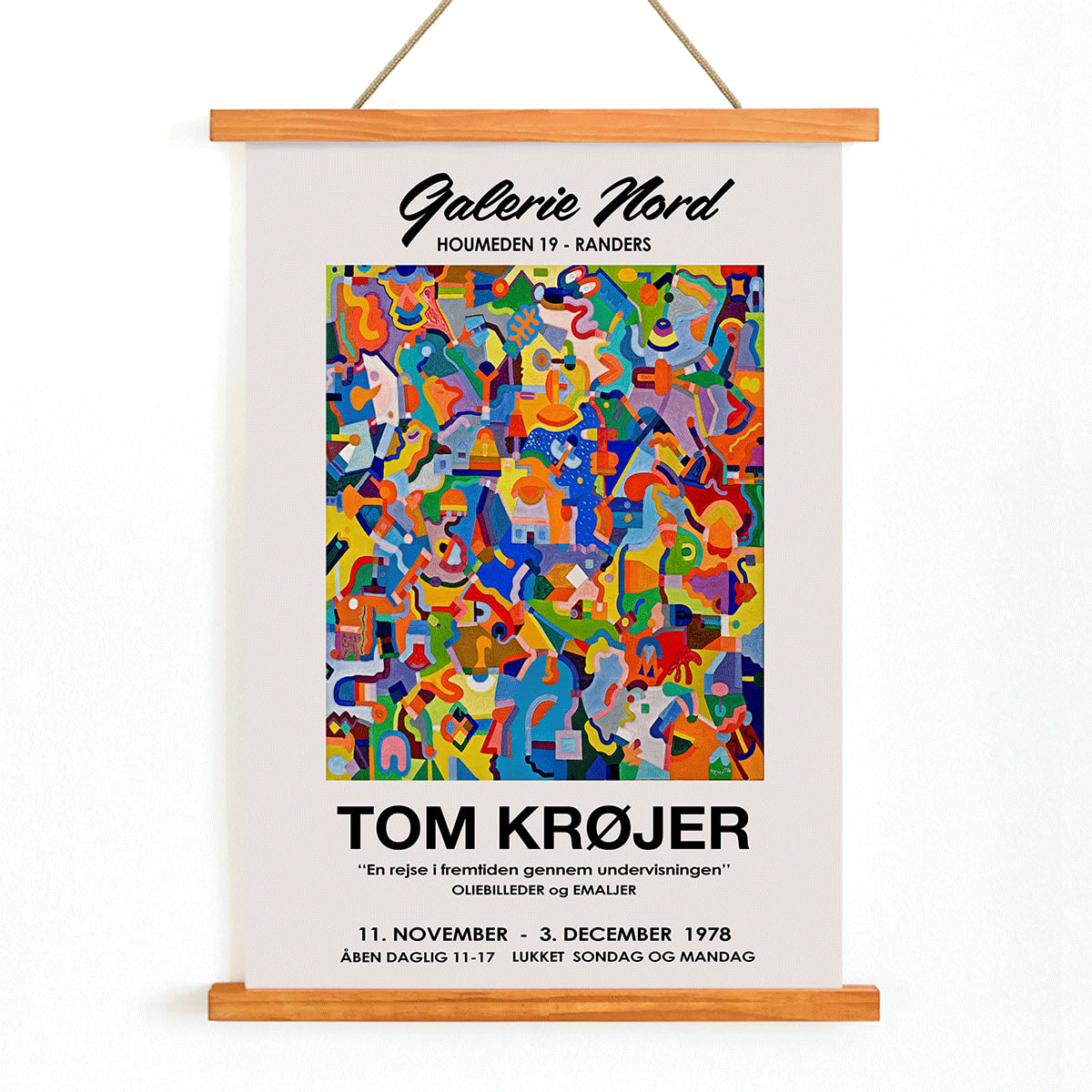
Tom Krojer is recognized for his contributions to late 20th century graphic design, a period when exhibition posters played a vital role in shaping public perceptions of art and culture. Designers of this era, including Krojer, shifted away from illustrative traditions, instead using bold visual language to communicate identity and intent. Their work became a bridge between institutions and the public, reflecting the evolving aesthetics of modernism and the rise of design as a cultural force.
The Artwork
Produced in 1989, this exhibition poster was created to promote an art or design event, aiming to capture attention in urban environments such as gallery entrances and city streets. The poster’s primary function was to deliver immediate visual impact, ensuring that the event’s presence was unmistakable amid the visual noise of public spaces. As a result, works like this have become valuable records of how cultural events were communicated and are now appreciated as icons of graphic design history.
Style & Characteristics
The poster features a striking composition of geometric shapes and crisp, modern typography. Large blocks of saturated blue dominate the design, complemented by vivid accents in red, yellow, and black. The interplay of sharp lines and confident spacing creates a sense of structure and movement, while the flat application of color gives the piece a distinctly engineered, rather than painterly, quality. The overall mood is energetic and forward-looking, resonating with Bauhaus-inspired modernism and pairing well with abstract wall art and Bauhaus design posters.
In Interior Design
This vintage exhibition poster makes a bold statement in contemporary interiors, especially those with minimalist or mid-century influences. Its graphic clarity and vivid palette create a strong focal point in living rooms, offices, or hallways. For a harmonious display, consider pairing it with neutral walls, light woods, or black frames. To explore more typography-driven decor, browse classic advertising posters and complementary vertical posters.