


You may also like
-

Koi Poster
Ohara Koson · 1926 · Serene koi poster featuring a drifting carp and tranquil blue water
Poster from €9 · Framed from €16
-

Flowering Water Lily Poster
Ohara Koson · 1910 · Serene botanical print of pink water lilies floating among rounded lily pads
Poster from €9 · Framed from €16
-

Blooming lotus flowers Poster
Ohara Koson · 1923 · Serene lotus flowers print with soft pink blooms and calm blue tones
Poster from €9 · Framed from €16
-

Geese amid Reeds Poster
Ohara Koson · 1928 · Serene waterfowl art print of white geese drifting through reeds on blue water
Poster from €9 · Framed from €16


-

"Very nice Posters. The quality is amazing and we received it very quickly !"
-

"A shop to visit absolutely. Huge selection of posters. We spent more than an hour there !"
-

"Perfect to find gift. Price are very good. An they can frame and pack it on site"


About the Artist
Ohara Koson was a Japanese artist associated with the shin hanga movement, renowned for his kacho-e prints that brought birds, flowers, and aquatic life into poetic focus. Active in the early 20th century, Koson worked with leading publishers to refine the ukiyo-e tradition for a new audience, blending subtle emotion with elegant design. His works are celebrated for their quiet lyricism and are highly sought after by collectors.
Discover more refined prints in our Ohara Koson collection, perfect for those interested in Japanese art and tranquil imagery.
The Artwork
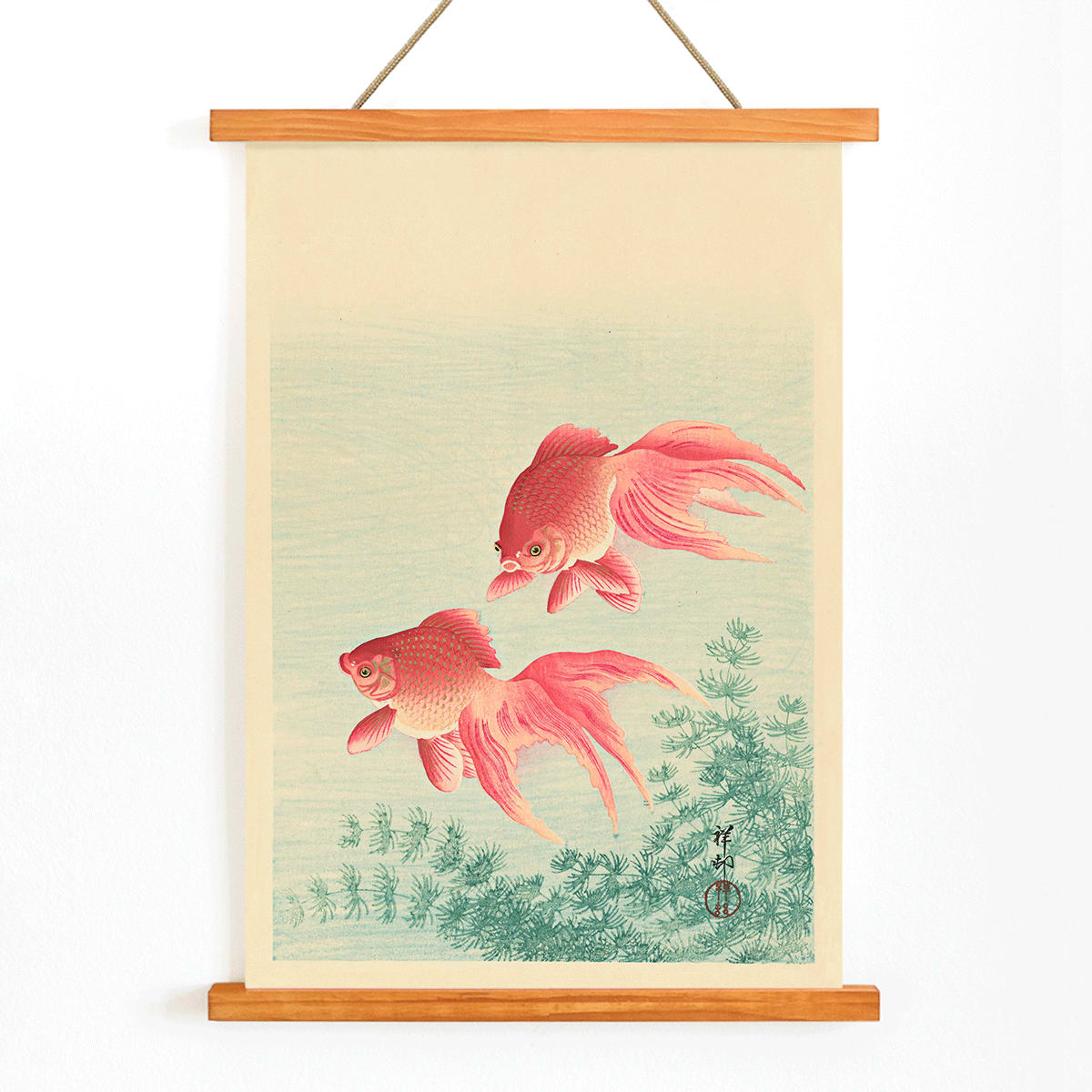
Two Goldfishes reflects the Japanese fascination with goldfish as symbols of summer leisure and gentle beauty. During the late Edo and Taisho periods, keeping ornamental fish became a beloved pastime, representing both domestic comfort and the fleeting pleasures of nature. Koson's choice of subject invites viewers to pause and appreciate the understated elegance found in everyday moments, transforming a common motif into a meditative work of art.
This piece exemplifies the kacho-e tradition, where observation and serenity take precedence over narrative, offering a window into the cultural appreciation of subtle natural scenes.
Style & Characteristics
The print features two goldfish gliding through a wide expanse of water, rendered with minimal lines and delicate shading. The composition is spacious, with cool blue tones dominating the background and gentle ripples suggesting movement. The goldfish are depicted in crisp, warm hues, their forms standing out against the tranquil blue, while soft transitions and careful use of negative space create a sense of depth and calm.
The overall effect is one of serene simplicity, balancing traditional Japanese aesthetics with a modern, minimalist sensibility. This makes the print a timeless addition to any art collection.
In Interior Design
This art print brings a soothing focal point to living rooms, bedrooms, or studies, especially in interiors that favor natural materials and understated palettes. It complements Japandi, minimalist, and coastal styles, pairing beautifully with light woods, linen, and ceramics.
For harmonious decor, combine with off-white or beige walls and subtle green accents from plants or textiles. It also works well in a gallery wall alongside other blue-themed prints or nature-inspired pieces from our animals collection.