


You may also like
-
Human Musculature Poster
Unknown artist · 1894 · Detailed human anatomy scientific print showing musculature studies on warm beige paper
Poster from €9 · Framed from €16
Regular price From €6,00Regular price -
The anatomy of the horse Poster
George Stubbs · 1853 · Striking horse anatomy scientific print in crisp monochrome with labeled studies
Poster from €9 · Framed from €16
Regular price From €6,00Regular price -
Human Nervous System Poster
Galtier-Boissière and Émile · 1912 · Detailed anatomical scientific print of the human nervous system in red on white
Poster from €9 · Framed from €16
Regular price From €6,00Regular price -
The human body Poster
Augé and Claude · 1900 · Antique anatomical scientific print presenting the human figure with labeled study diagrams
Poster from €9 · Framed from €16
Regular price From €6,00Regular price


-

"Very nice Posters. The quality is amazing and we received it very quickly !"
-

"A shop to visit absolutely. Huge selection of posters. We spent more than an hour there !"
-

"Perfect to find gift. Price are very good. An they can frame and pack it on site"


About the Artist
Created by an anonymous artist, this 1904 anatomical plate reflects the practical clarity of early twentieth century veterinary and medical illustration. In an era when print culture carried scientific knowledge into classrooms, stables, and clinics, draughtsmanship had to be both accurate and immediately readable.
Rather than a personal signature style, the authority here comes from method: measured observation, standardized labeling, and a disciplined approach to form. For more works that celebrate learning through image, explore our science wall art selection for study-ready posters and prints.
The Artwork
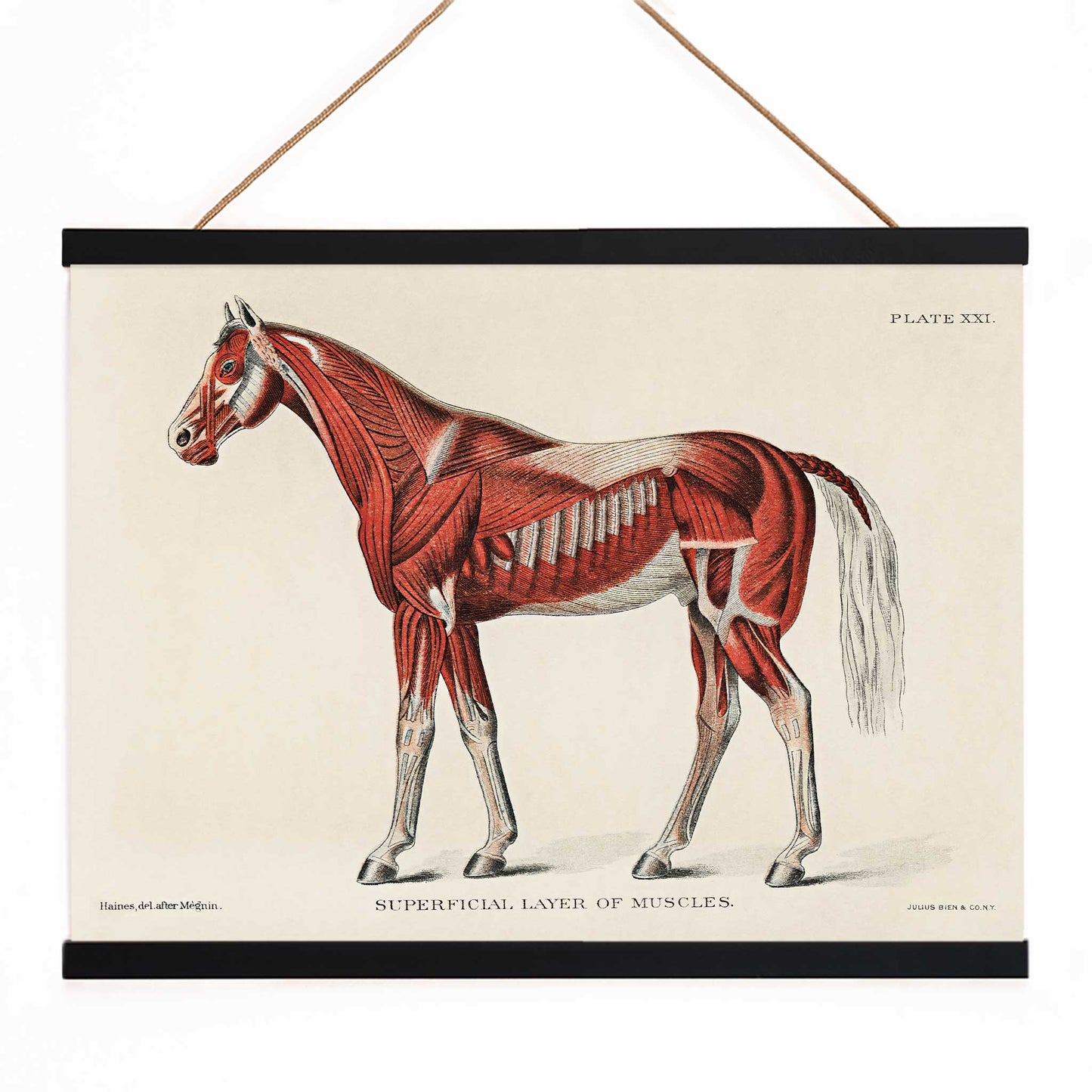
This plate was created as a teaching tool to help students and professionals understand the superficial muscular system of the horse. At a time when horses played a vital role in transport, agriculture, and sport, such anatomical illustrations were essential for veterinary education and informed horsemanship.
The artwork bridges art and instruction, presenting the horse’s musculature as a map of function and movement. It served as a reference for those studying equine anatomy and reflects the era’s commitment to scientific accuracy and visual clarity.
Style & Characteristics
The composition features a precise side view of a horse, with muscle groups rendered in red tones against a warm beige background. Fine linework, clean contours, and small numbered labels guide the viewer’s eye across the anatomy, from the neck and shoulders to the hindquarters.
The mood is calm and clinical, characteristic of scientific illustration intended for close study. As a vintage scientific print, it stands out for its clarity and organization, making it suitable for display in both educational and decorative contexts. Discover more in our beige tone prints and red accent posters.
In Interior Design
This equine anatomy wall art is ideal for a home office, library, studio, or veterinary practice, adding a scholarly touch to the decor. It also complements tack rooms or rustic living spaces where equestrian culture is appreciated.
Pair it with oak, black metal, or natural linen for a harmonious look; the beige paper softens modern interiors, while the red musculature draws the eye. For a cohesive gallery wall, explore our animals art prints for related imagery.