


You may also like
-
Composition Poster
Georges Valmier · 1921 · Dynamic abstract art print of interlocking shapes and vivid color blocks in motion
Poster from €9 · Framed from €16
Regular price From €6,00Regular price -
Blau in Rund und Spitz Poster
Wassily Kandinsky · 1933 · Abstract geometric art print balancing blue circles, sharp angles, and red accents
Poster from €9 · Framed from €16
Regular price From €6,00Regular price -
Komposition Poster
Otto Freundlich · 1936 · Vibrant geometric art print with interlocking color planes and bold modernist energy
Poster from €9 · Framed from €16
Regular price From €6,00Regular price -
11 tableux et 7 poèmes Poster
Wassily Kandinsky · 1945 · Rhythmic geometric poster balancing bright primary shapes with refined modernist typography
Poster from €9 · Framed from €16
Regular price From €6,00Regular price


-

"Very nice Posters. The quality is amazing and we received it very quickly !"
-

"A shop to visit absolutely. Huge selection of posters. We spent more than an hour there !"
-

"Perfect to find gift. Price are very good. An they can frame and pack it on site"


About the Artist
Patrick Henry Bruce was an American modernist who spent much of his artistic career in Paris, where he became closely associated with the Cubist movement. Immersed in the vibrant avant-garde circles of early 20th-century Europe, Bruce absorbed the radical ideas of his contemporaries and contributed to the transatlantic exchange of modernist thought. His disciplined approach to abstraction and structure helped shape the evolution of American modern art.
Bruce’s work reflects a fascination with order, rhythm, and the architectural possibilities of painting, positioning him as a significant figure in the development of geometric abstraction.
The Artwork
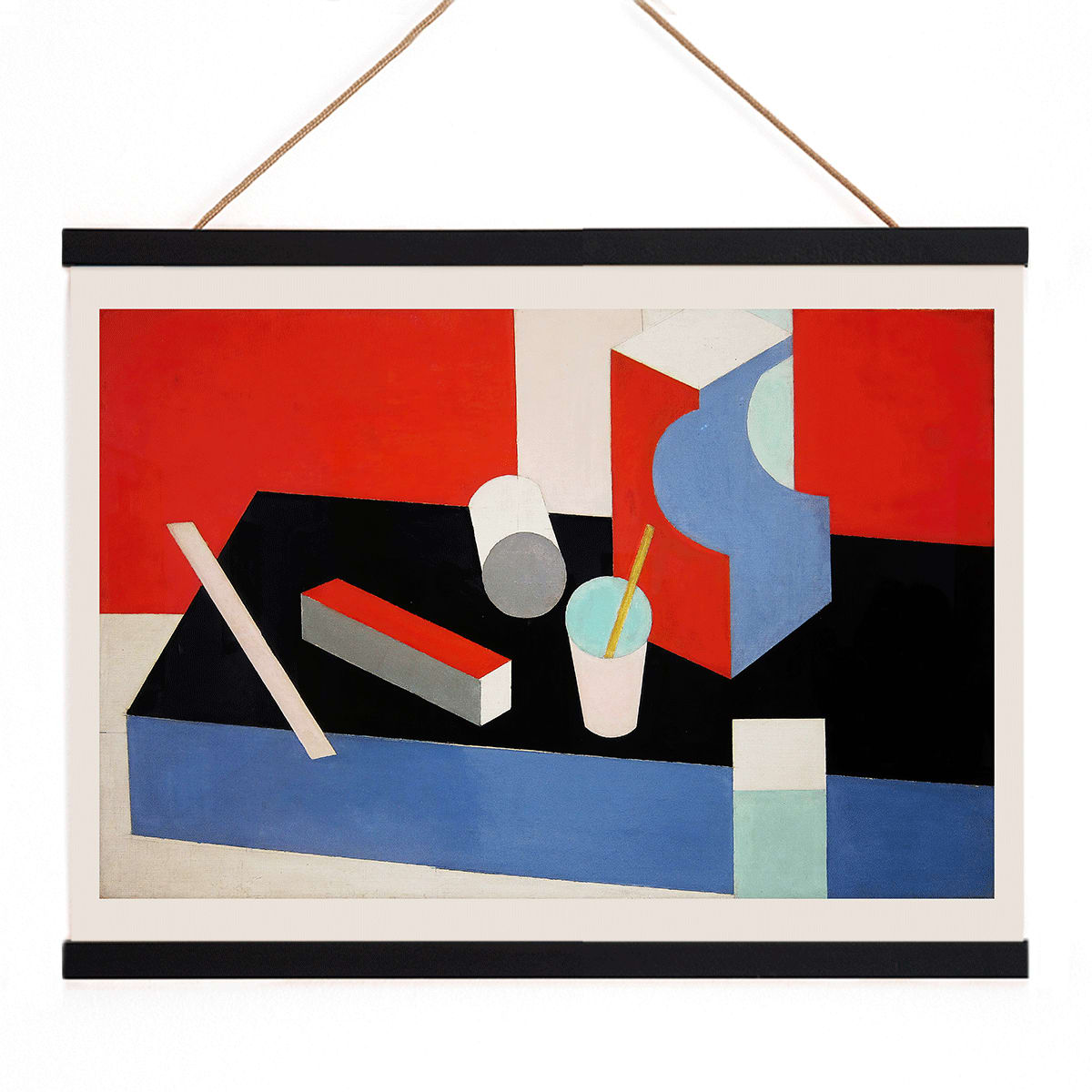
Created in 1917, Kubik emerged during a period when artists were seeking new visual languages in response to the upheaval of World War I. Rather than depicting recognizable subjects, Bruce’s composition explores the idea of space as something constructed and intentional. The artwork embodies the Cubist desire to break down forms and reassemble them into harmonious relationships, offering a sense of stability and balance in uncertain times.
Kubik stands as a testament to early American engagement with European modernism, representing a thoughtful inquiry into the nature of perception and structure.
Style & Characteristics
Kubik features a precise arrangement of interlocking geometric planes, dominated by bold areas of red, blue, black, and white. The painting’s flat, hard-edged shapes and sharp color contrasts create a dynamic, architectonic effect, reminiscent of stacked facades or shifting walls. The overall mood is energetic yet controlled, with a clarity that draws the viewer’s eye across the surface.
This work appeals to admirers of abstract wall art and those inspired by the rationality of Bauhaus posters, making it a striking geometric art print for modern interiors.
In Interior Design
This Cubist art print integrates seamlessly into contemporary, mid-century, or minimalist spaces, where its crisp lines and vivid colors can serve as a focal point. It works well in living rooms, studies, or creative workspaces, especially when paired with clean-lined furnishings and neutral backgrounds.
To highlight the artwork’s palette, consider echoing the red and blue accents in accessories or textiles, and use a slim black frame for a refined finish. For further inspiration, explore frames to enhance the geometric clarity of this modernist piece.