


You may also like
-
Parrots II Poster
Institut of Leipzig · 2012 · Lush parrot print featuring three macaws perched on tropical branches
Poster from €9 · Framed from €16
Regular price From €6,00Regular price -
Euphema Splendida Poster
Unknown artist · 1848 · Detailed parakeet print with three birds perched among leafy branches
Poster from €9 · Framed from €16
Regular price From €6,00Regular price -
Parrots I Poster
Institut of Leipzig · 1972 · Vibrant parrot print arranged like a natural history plate with crisp scientific detail
Poster from €9 · Framed from €16
Regular price From €6,00Regular price -
Blue Macaws Poster
Berthe Art · 1890 · Vibrant macaw poster with blue and yellow plumage amid dense tropical foliage
Poster from €9 · Framed from €16
Regular price From €6,00Regular price


-

"Very nice Posters. The quality is amazing and we received it very quickly !"
-

"A shop to visit absolutely. Huge selection of posters. We spent more than an hour there !"
-

"Perfect to find gift. Price are very good. An they can frame and pack it on site"


About the Artist
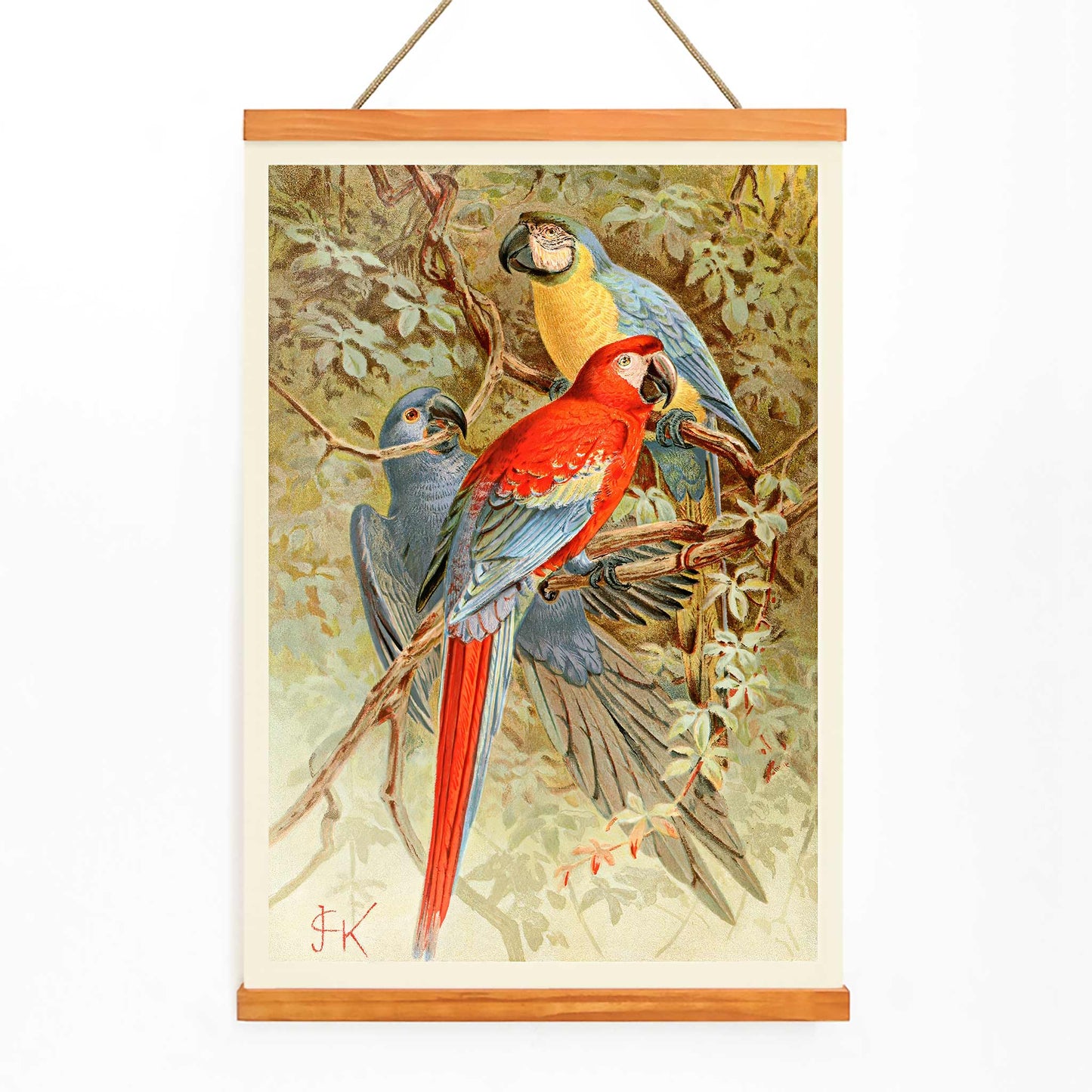
Created by an anonymous artist, this 1893 macaw illustration reflects the late nineteenth century passion for cataloging the natural world. During this era, ornithological studies flourished as museums and illustrated books made exotic species accessible to a curious public. The work is rooted in a tradition that prized scientific accuracy and educational value, serving both as a record of biodiversity and a source of inspiration for naturalists and collectors.
Though unsigned, the illustration is part of a broader movement to document and celebrate global wildlife, reflecting the era’s fascination with discovery and the expansion of knowledge about distant habitats.
The Artwork
In the late 1800s, macaws were emblematic of the world’s biodiversity and the allure of tropical regions. This illustration was likely intended to educate viewers about the unique appearance and behavior of these striking birds, supporting the growing interest in natural history and travel. Such images helped audiences imagine faraway rainforests and understand the diversity of avian life beyond their own continent.
The macaw’s depiction here also conveys themes of vibrancy and intelligence, making it a meaningful addition to collections focused on nature, exploration, or the intersection of art and science.
Style & Characteristics
The composition features three vividly colored macaws perched among dense green foliage, each bird carefully rendered to highlight its distinctive plumage. The artist employs crisp outlines and detailed feather patterns, hallmarks of nineteenth-century scientific illustration. Rich reds, blues, yellows, and greens dominate the palette, set against earthy brown branches and leaves, creating a lively yet harmonious scene.
The overall effect is both educational and decorative, appealing to admirers of animal art and those drawn to science-inspired prints. The illustration’s clarity and color saturation make it a striking focal point in any setting.
In Interior Design
This macaw print brings energy and color to living rooms, hallways, or home offices, especially when paired with natural materials like wood, rattan, or linen. Its vibrant hues can be echoed in accent pieces such as blue ceramics, red cushions, or yellow decor, while natural wood tones help ground the space.
It also integrates seamlessly into a plant-filled reading nook or alongside botanical prints, creating a cohesive, nature-inspired interior that celebrates the beauty of the natural world.