


You may also like
-

Astrocaryum Vulgare Poster
Carl Friedrich Philipp von Martius · 1823 · Detailed palm botanical print with specimen studies on warm beige paper
Poster from €9 · Framed from €16
-

Corypha Cerifera Arruda Poster
Carl Friedrich Philipp von Martius · 1823 · Detailed palm botanical print with fan leaves and precise scientific inset studies
Poster from €9 · Framed from €16
-

Euterpe Oleracea Poster
Carl Friedrich Philipp von Martius · 1823 · Detailed palm print showing fronds, fruit clusters, and botanical study diagrams on beige
Poster from €9 · Framed from €16
-

Attalea Compta 2 Poster
Carl Friedrich Philipp von Martius · 1823 · Detailed palm botanical print with scientific studies on warm beige paper
Poster from €9 · Framed from €16


-

"Very nice Posters. The quality is amazing and we received it very quickly !"
-

"A shop to visit absolutely. Huge selection of posters. We spent more than an hour there !"
-

"Perfect to find gift. Price are very good. An they can frame and pack it on site"


About the Artist
Carl Friedrich Philipp von Martius was a German botanist and explorer whose early 19th-century expeditions in Brazil greatly advanced the study of tropical plants. His meticulous documentation and classification of palms set new standards in botanical science, and his illustrated works remain influential in both scientific and artistic circles.
Martius’s dedication to field research and taxonomy contributed to a deeper understanding of Amazonian flora, making his publications a cornerstone for later botanical studies and a source of inspiration for natural history illustration.
The Artwork
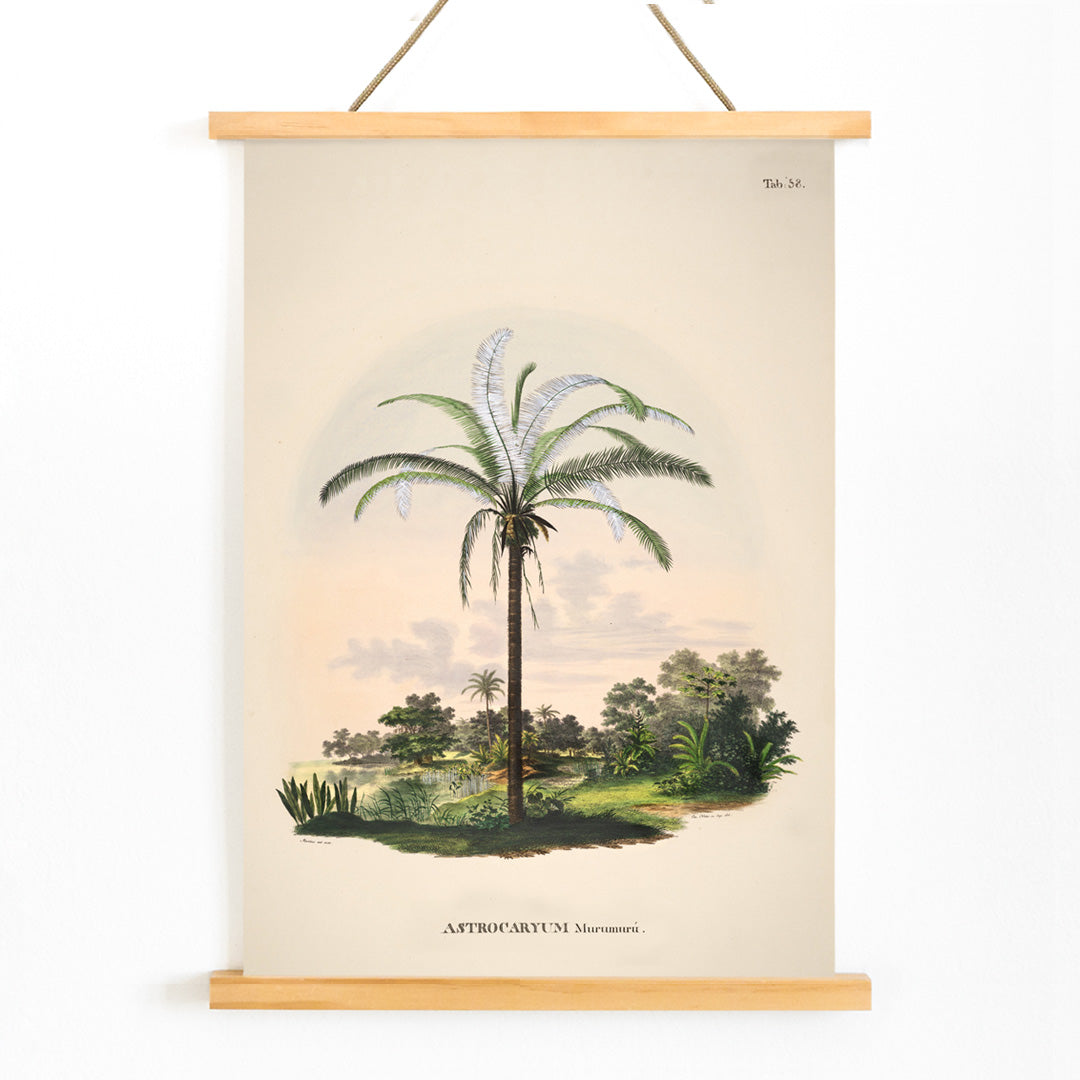
This plate depicting Astrocaryum Murumuru was created during a period when European botanists relied on detailed illustrations to communicate discoveries from distant lands. Published as part of Martius’s comprehensive palm studies, the image served as a scientific reference for identifying and comparing palm species across the Amazon basin.
The artwork reflects the era’s spirit of exploration and the drive to systematically document the natural world. It stands as a testament to the intersection of scientific inquiry and visual artistry in early 19th-century botanical publishing.
Style & Characteristics
The print features a central rendering of the Astrocaryum Murumuru palm, with its spiny trunk and arching fronds, accompanied by smaller studies of fruit and botanical details. The composition is precise and methodical, characteristic of scientific illustration from the period.
Dominant colors include rich botanical greens in the foliage, deep browns in the trunk and fruit, and a warm beige background that highlights the subject. The overall mood is calm and scholarly, making it a classic example of botanical art prints and complementing other works from the science collection.
In Interior Design
This vintage botanical print lends a sense of history and refinement to spaces such as studies, libraries, or dining rooms. Its detailed imagery pairs well with natural materials like wood, rattan, or linen, and suits both traditional and modern interiors.
To create a harmonious look, consider echoing the print’s greens with indoor plants or textiles, and use the beige background as inspiration for wall colors or framing. It also integrates seamlessly with beige tone artworks for a curated, timeless display.