


You may also like
-

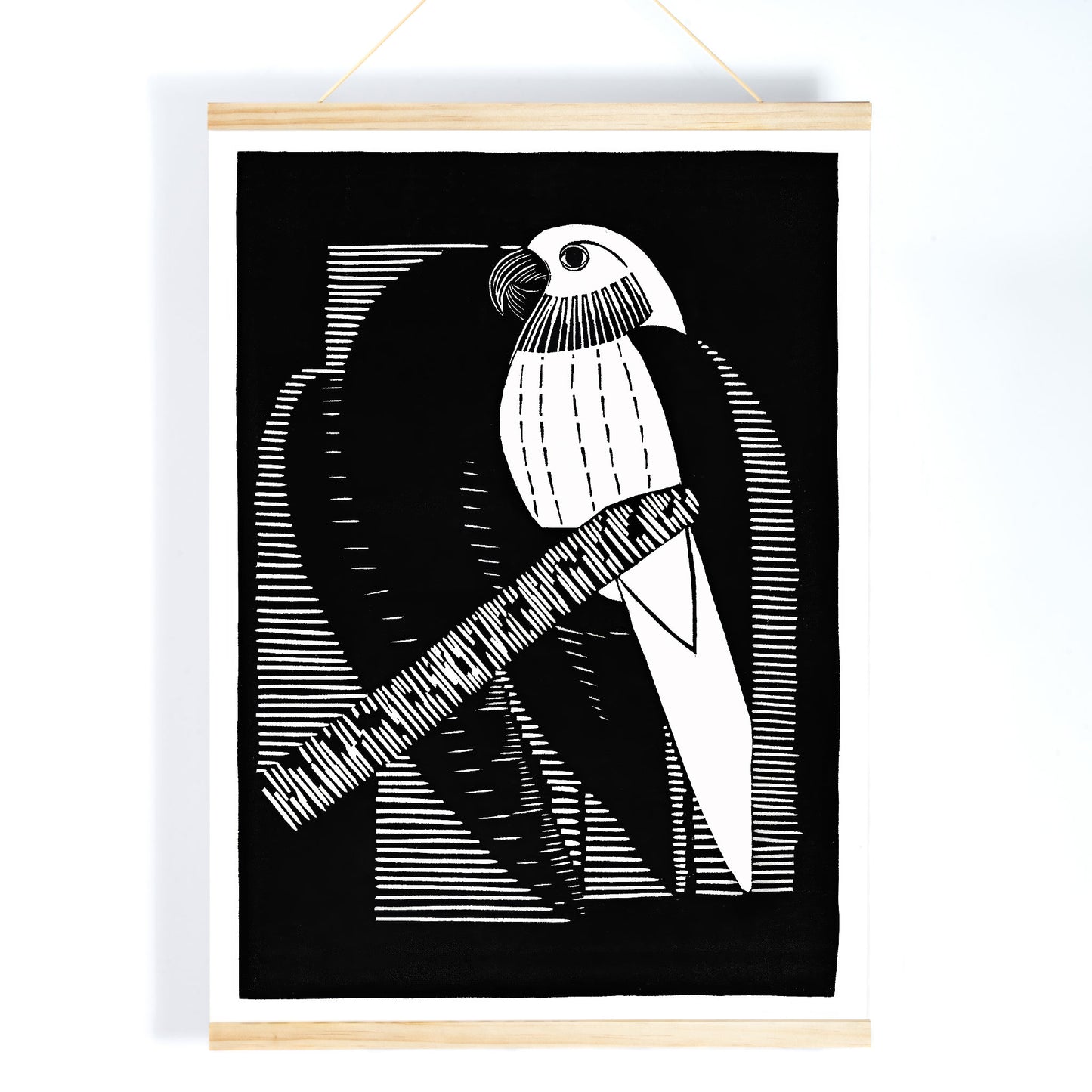
Kroonkaketoe Poster
Samuel Jessurun de Mesquita · 1924 · High-contrast cockatoo poster in crisp black-and-white linework with Art Deco poise
Poster from €9 · Framed from €16
-

Black Cat 2 Poster
Unknown artist · 1750 · Minimal black cat vintage print with red seal accent on warm beige
Poster from €9 · Framed from €16
-

A Jungle Picnic 7 Poster
Clifford Webb · 1934 · Playful tropical bird poster with stylized foliage and an upbeat jungle picnic scene
Poster from €9 · Framed from €16
-

Black Cat 3 Poster
Unknown artist · 1750 · Minimal black cat print with bold silhouette and red calligraphy on warm beige
Poster from €9 · Framed from €16


-

"Very nice Posters. The quality is amazing and we received it very quickly !"
-

"A shop to visit absolutely. Huge selection of posters. We spent more than an hour there !"
-

"Perfect to find gift. Price are very good. An they can frame and pack it on site"


About the Artist
Samuel Jessurun de Mesquita was a Dutch graphic artist whose innovative printmaking helped shape the visual language of early 20th-century Dutch modernism. His work bridged the Art Nouveau and Art Deco movements, and he became renowned for his ability to distill natural forms into striking, memorable designs.
De Mesquita was also a formative teacher to M C Escher, imparting a disciplined approach to line, pattern, and composition. His legacy endures in both his own animal subjects and in the influence he had on a generation of Dutch artists.
The Artwork
Created in 1927, Parakeets emerged during a period when European artists sought to blend the energy of the natural world with the clarity of modern design. Rather than documenting birds for scientific study, de Mesquita transformed them into rhythmic motifs, reflecting a cultural fascination with exotic animals as symbols of sophistication and companionship.
This print embodies the interwar desire to bring elements of nature into domestic life through stylized, decorative forms. It illustrates how modernism could reinterpret familiar subjects to suit contemporary tastes and interiors.
Style & Characteristics
The composition is rendered in bold black and white, with parakeets constructed from interlocking curves, sharp angles, and decisive outlines. The high contrast and simplified shapes create an immediate visual impact, while subtle linear textures evoke the birds' plumage without resorting to naturalistic detail.
The overall effect is graphic and architectural, characteristic of Art Deco's streamlined elegance. This fine art print will appeal to those drawn to black and white wall art and the graphic clarity of early modernist design.
In Interior Design
Parakeets serves as a sophisticated focal point in living rooms, hallways, or offices, offering visual interest without introducing color. Its monochrome palette pairs seamlessly with light woods, chrome, black metal, or stone, making it ideal for Scandinavian, modernist, or mid-century interiors.
Consider framing it simply for a gallery effect, or explore frames to complement your decor. It also harmonizes with curated animal art prints and Bauhaus-inspired posters for a cohesive, design-forward space.