


You may also like
-

Section and Elevation of a Lighthouse Poster
Unknown artist · 1889 · Precise lighthouse elevation vintage print with sectional details in crisp black linework
Poster from €9 · Framed from €16
-

Principal buildings in the world Poster
James Reynolds · 1850 · Comparative architectural poster featuring world landmarks in sepia linework and blue accents
Poster from €9 · Framed from €16
-

Tour Eiffel 2 Poster
Unknown artist · 1925 · Striking black-and-white Eiffel Tower poster with crisp iron latticework and Paris skyline
Poster from €9 · Framed from €16
-

View of the Eiffel Tower Poster
Leo Gestel · 1921 · Expressive black and white Eiffel Tower poster rendered with dynamic modernist lines
Poster from €9 · Framed from €16


-

"Very nice Posters. The quality is amazing and we received it very quickly !"
-

"A shop to visit absolutely. Huge selection of posters. We spent more than an hour there !"
-

"Perfect to find gift. Price are very good. An they can frame and pack it on site"


About the Artist
G.L. Taylor was a nineteenth-century architect and architectural draughtsman known for his contributions to the British tradition of measured architectural drawing. Working during a period when architectural education emphasized detailed plates and precise observation, Taylor played a key role in documenting historic monuments for study and reference.
His work bridges the worlds of architecture, travel, and publishing, offering a visual record that served both students and enthusiasts. Taylor’s prints reflect a time when the appreciation of architectural heritage was spreading through illustrated publications and the rise of the Grand Tour.
The Artwork
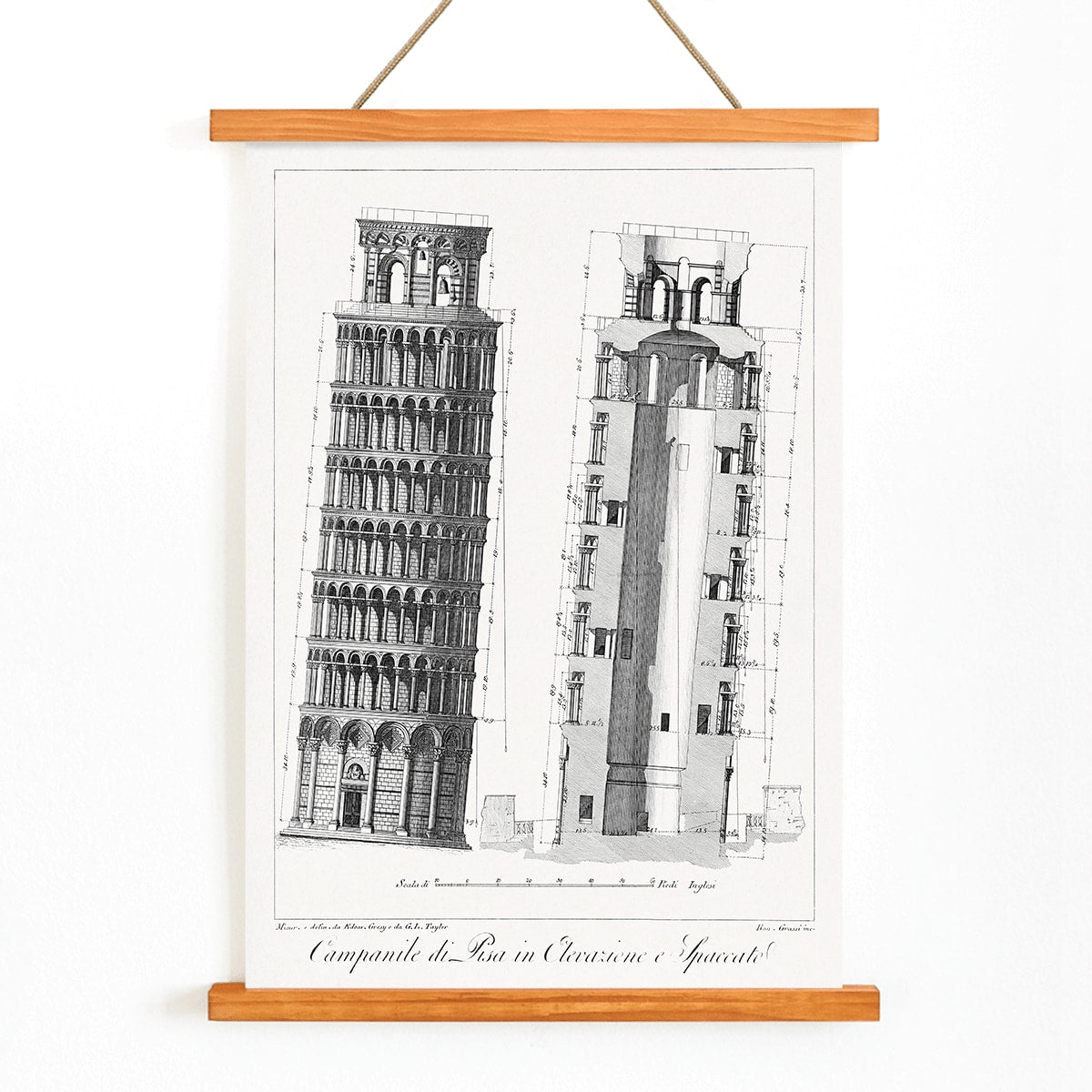
Created in 1837, this print of the Campanile di Pisa captures the Leaning Tower as a subject of fascination and scholarly interest. During the nineteenth century, such images were valued as both souvenirs and educational tools, helping to disseminate knowledge of iconic European landmarks to a wider audience.
The Leaning Tower’s distinctive tilt had already made it a symbol of both medieval ingenuity and unresolved engineering challenges. This artwork reflects the era’s admiration for historic structures and the desire to study their proportions and construction methods from afar.
Style & Characteristics
This vintage architectural print is rendered in a crisp monochrome palette of black, white, and soft grey, emphasizing the tower’s form and structural details. The fine linework and careful shading evoke the precision of an engraving or lithograph, with particular attention to the stacked arcades and the elegant silhouette.
The composition is calm and analytical, inviting the viewer to appreciate the tower’s proportions and intricate details. Those interested in black and white posters or the timeless appeal of classic art prints will find a quiet sophistication in this piece, ideal for a curated gallery wall.
In Interior Design
This fine art print suits a range of interiors, from studies and hallways to living rooms where architectural forms enhance the atmosphere. It pairs well with materials like stone, walnut, matte black metal, and linen, complementing minimalist, Scandinavian, and classic European styles.
Maintain a tonal palette with greys and warm whites, or use the print to add definition to an eclectic wall alongside photography or maps. For a polished display, consider pairing it with selections from our frames collection to echo its refined quality and create a gallery-inspired look.