


You may also like
-
Portraits of an Actor in costume Poster
Toyohara Kunichika · 1870 · Dramatic kabuki actor print with bold costume patterns and intense gaze
Poster from €9 · Framed from €16
Regular price From €6,00Regular price -
Portraits of an Actor Poster
Toyohara Kunichika · 1868 · Dramatic kabuki actor poster with bold makeup, patterned robe, and vivid color blocks
Poster from €9 · Framed from €16
Regular price From €6,00Regular price -
The Actor Kawarazaki Gonjuro Poster
Utagawa Kunisada II · 1864 · Dramatic kabuki actor art print with bold costume patterns and intense gaze
Poster from €9 · Framed from €16
Regular price From €6,00Regular price -
Mimasu Gennosuke Poster
Utagawa Kuniyoshi · 1830 · Dramatic kabuki warrior art print with bold patterns and vivid red accents
Poster from €9 · Framed from €16
Regular price From €6,00Regular price


-

"Very nice Posters. The quality is amazing and we received it very quickly !"
-

"A shop to visit absolutely. Huge selection of posters. We spent more than an hour there !"
-

"Perfect to find gift. Price are very good. An they can frame and pack it on site"


About the Artist
Toyohara Kunichika was a leading figure in Meiji era ukiyo-e, working in Tokyo during a period of profound transformation in Japanese society. Renowned for his dynamic kabuki actor portraits, Kunichika captured the energy and charisma of the theater, offering audiences a way to bring the excitement of the stage into their homes.
His work is highly regarded among collectors of Japanese ukiyo-e wall art and those interested in the visual history of kabuki. Kunichika’s prints stand out for their dramatic presence and their ability to bridge tradition with the emerging modernity of late 19th-century Japan.
The Artwork
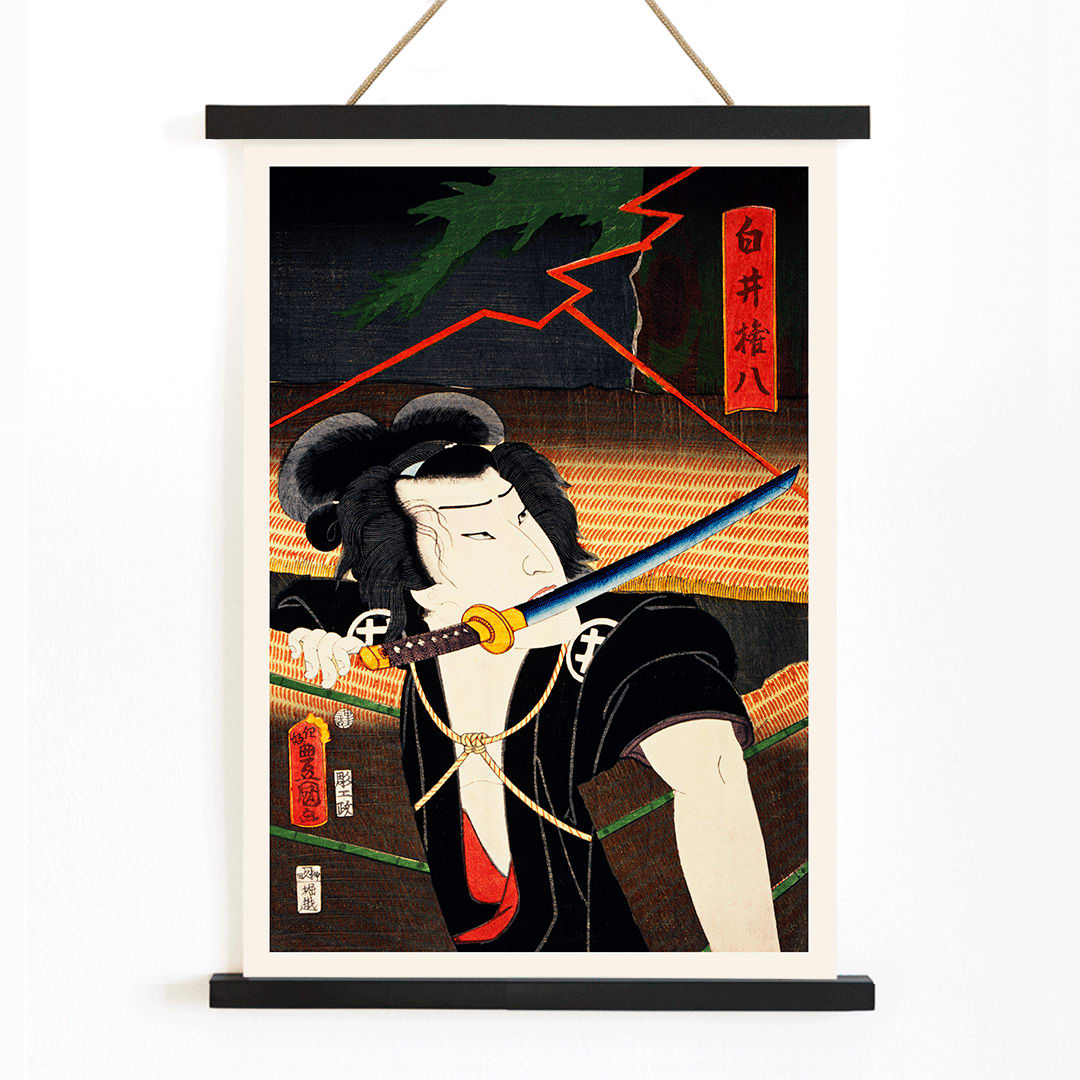
This print exemplifies the era’s fascination with kabuki actors, who were celebrated for their ability to embody multiple roles and personas. In the 1880s, such images were widely distributed, serving as both affordable art and cherished mementos for theater fans.
Created at a time when Japan was balancing its cultural heritage with new influences, Kunichika’s depiction of a samurai performer highlights themes of reputation, transformation, and spectacle. As a vintage kabuki actor poster, it preserves the spirit of popular entertainment and reflects the enduring connection between performance and visual culture, making it ideal for vertical posters displays.
Style & Characteristics
The composition centers on a single, commanding figure, closely cropped to emphasize facial expression and the elaborate costume. Strong black outlines define the features and garments, while areas of saturated color create a bold, rhythmic visual effect.
Rich blacks and warm browns ground the image, contrasted by vibrant reds, blues, and greens that add theatrical flair. The overall mood is intense and dramatic, with a sense of poised energy that makes this Japanese woodblock print a striking addition to both traditional and modern interiors.
In Interior Design
This art print introduces a sense of narrative and focus to spaces such as living rooms, entryways, or studies, especially as a statement piece. It pairs well with dark woods, lacquered surfaces, and neutral backgrounds that allow the artwork’s contrasts to stand out.
To create harmony, consider echoing the print’s red or blue accents in textiles or accessories, while keeping surrounding decor understated. A slim black or natural wood frame from frames complements the graphic style and suits Japanese-inspired, eclectic, or contemporary settings.