


You may also like
-

Twenty Tropical Shells Poster
Johann Gustav Hoch · 1750 · Detailed tropical shells print arranged like a collector plate on clean white ground
Poster from €9 · Framed from €16
-

Voyage autour du monde 56 Poster
Louis-Isidore Duperrey · 1825 · Delicate seashell print arranged as a scientific plate with warm coastal tones
Poster from €9 · Framed from €16
-

Voyage autour du monde 58 Poster
Louis-Isidore Duperrey · 1825 · Detailed mollusk shell scientific print arranged like a museum plate on warm paper
Poster from €9 · Framed from €16
-

Twelve shells Poster
Jacob de Later · 1705 · Detailed scientific print of twelve snail shells arranged like a collector plate
Poster from €9 · Framed from €16


-

"Very nice Posters. The quality is amazing and we received it very quickly !"
-

"A shop to visit absolutely. Huge selection of posters. We spent more than an hour there !"
-

"Perfect to find gift. Price are very good. An they can frame and pack it on site"


About the Artist
Johann Gustav Hochbrucker was a nineteenth-century natural history illustrator known for his meticulous approach to documenting the natural world. His work contributed to the spread of scientific knowledge at a time when printed illustrations were vital for study and classification. Hochbrucker’s illustrations bridged the gap between scientific accuracy and artistic sensitivity, making rare and delicate specimens accessible to scholars and enthusiasts alike.
His legacy is part of the broader tradition of natural history illustration, which flourished during a period of intense curiosity about the natural world. For those interested in this intersection of art and science, discover more in our scientific illustration wall art and explore other treasures among our vintage print collections.
The Artwork
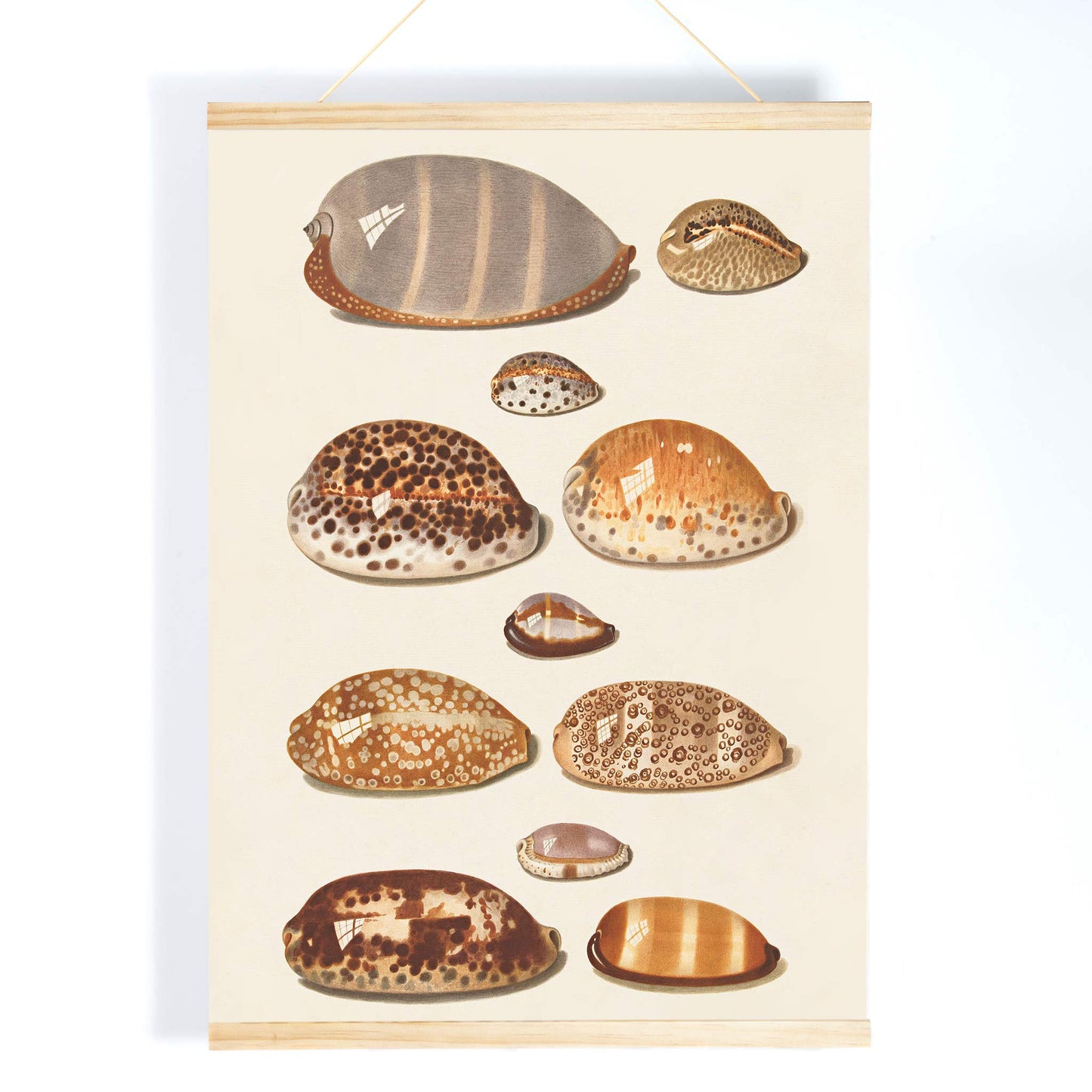
Created in 1837, this plate of tropical shells reflects the European fascination with conchology during the age of exploration. As global trade expanded, collectors and naturalists sought to document the diversity of shells arriving from distant shores. Such illustrations served as essential references for museums and private collections, helping to identify, compare, and preserve knowledge of these fragile specimens.
This artwork captures a pivotal moment when natural history was becoming more systematic, and the urge to catalogue the world’s wonders was at its peak. Each shell depicted here represents both scientific curiosity and the allure of the exotic, embodying the spirit of discovery that defined the era.
Style & Characteristics
The composition features eleven distinct shells, each rendered with precise linework and subtle shading that highlights their unique forms—ridges, spirals, and openings are carefully observed. The shells are arranged with ample space, giving the plate a curated, orderly appearance reminiscent of classic naturalist atlases.
The color palette is understated, with warm beige paper tones complemented by soft browns and gentle greys, lending the print an archival, tranquil quality. This refined approach makes it appealing for those who appreciate sea and ocean themed decorative art and value a sense of calm sophistication in their interiors.
In Interior Design
This vintage print is well-suited to studies, hallways, bathrooms, or living spaces where a subtle coastal reference is desired. Its neutral tones harmonize with linen, rattan, pale woods, and stone, fitting seamlessly into modern, Scandinavian, or traditional settings.
For a curated gallery wall, pair it with maps, botanical illustrations, or minimalist line drawings to maintain a serene atmosphere. It also layers beautifully with beige toned wall decor, adding a touch of natural history without overwhelming the space.