


You may also like
-
Jager Poster
Henri van der Stok · 1880 · Striking black and white poster of a dynamic hunter figure amid dense foliage
Poster from €9 · Framed from €16
Regular price From €6,00Regular price -
Pisces Poster
Henri van der Stok · 1913 · Graphic Pisces poster of two fish circling in swirling waves
Poster from €9 · Framed from €16
Regular price From €6,00Regular price -
Aquarius Poster
Henri van der Stok · 1913 · Stylized Aquarius poster featuring the water bearer in graphic black on beige
Poster from €9 · Framed from €16
Regular price From €6,00Regular price -
Sagittarius Poster
Henri van der Stok · 1900 · Striking Sagittarius poster with an archer centaur, loyal dog, and starry geometry
Poster from €9 · Framed from €16
Regular price From €6,00Regular price


-

"Very nice Posters. The quality is amazing and we received it very quickly !"
-

"A shop to visit absolutely. Huge selection of posters. We spent more than an hour there !"
-

"Perfect to find gift. Price are very good. An they can frame and pack it on site"


About the Artist
Henri van der Stok was a Dutch graphic artist active around the turn of the 20th century, known for his mastery of bold linework and striking contrasts. His work reflects the disciplined approach of a printmaker, where each mark is intentional and clarity of form is paramount. Van der Stok contributed to the early modern European poster movement, which sought to distill everyday subjects into powerful visual statements.
His legacy endures among collectors who appreciate the confident design and enduring presence of vintage graphic art. For those interested in similar aesthetics, explore our black and white wall art collection.
The Artwork
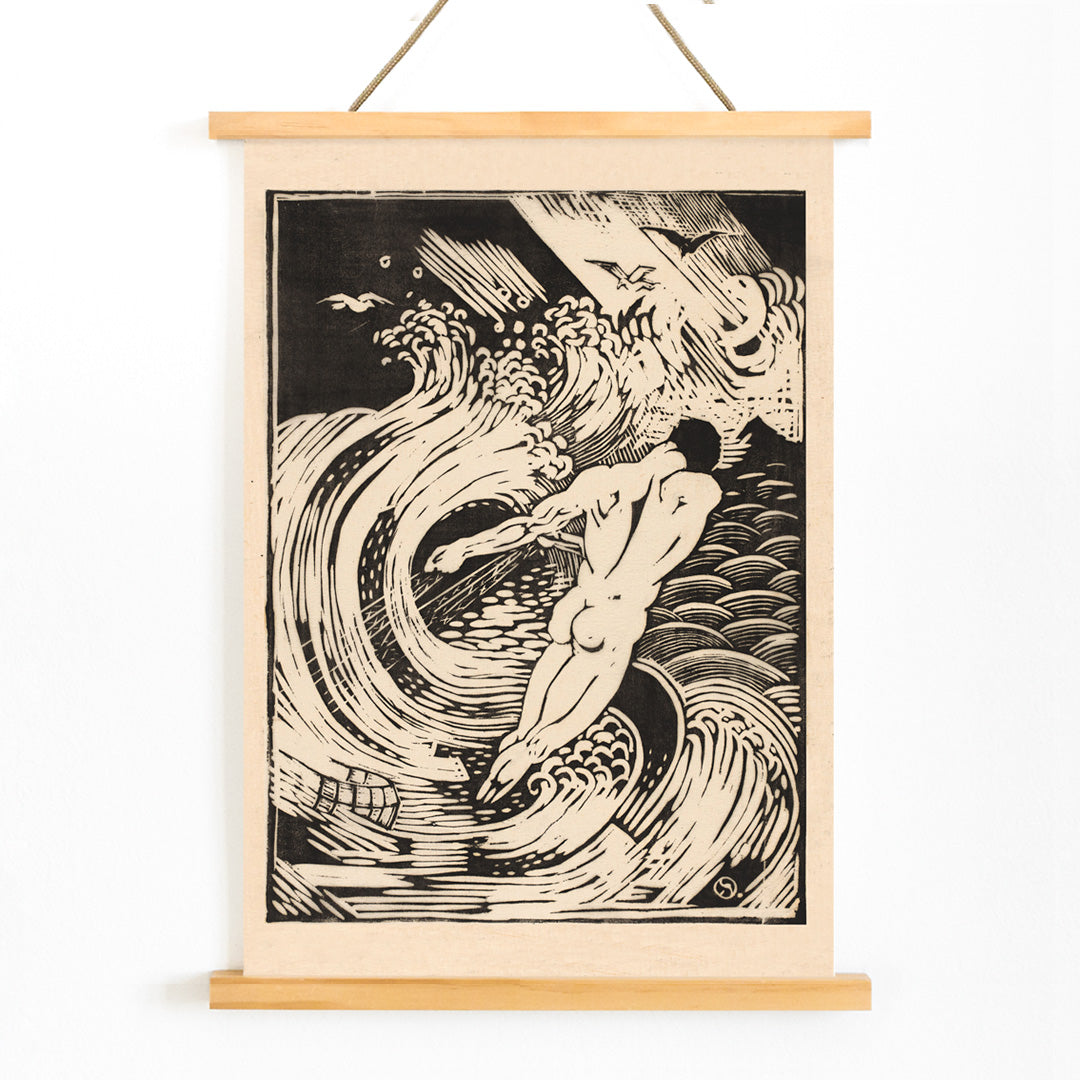
De visscher, or the fisherman, was created in 1900 during a period when European artists were reimagining scenes of labor and coastal life as modern icons. This work transforms the act of diving into a symbol of human resilience and confrontation with nature. Rather than simply depicting a maritime scene, van der Stok elevates the figure of the diver to represent the courage and vulnerability required to face the sea’s unpredictable forces.
The print reflects a broader artistic movement that celebrated the dignity of work and the elemental relationship between people and the ocean, bridging traditional folk themes with the emerging language of modern design.
Style & Characteristics
The artwork features a disciplined black-and-white palette, with bold dark forms set against bright negative space. The nude diver is rendered in dynamic curves and sharp lines, surrounded by stylized, swirling waves that suggest motion and energy. The absence of elaborate detail enhances the graphic immediacy, reminiscent of woodcut and early poster techniques.
This dramatic, elemental composition creates a sense of movement and tension, making it a striking example of early 20th-century graphic art. The piece pairs well with selections from our sea and ocean posters and resonates with the expressive forms found in our erotic art collection.
In Interior Design
This vintage poster makes a bold statement in spaces such as bathrooms, entryways, offices, or coastal living rooms, especially where clean lines and negative space are valued. Its monochrome palette suits minimalist, Scandinavian, and contemporary interiors, anchoring a gallery wall without overwhelming other artworks.
Display it on white or neutral walls for a crisp look, or on dark backgrounds for heightened contrast. A simple black frame emphasizes its graphic power, while natural materials like wood and linen can soften the overall effect, creating a balanced and curated atmosphere.