


You may also like
-
Winged Figure Poster
Abbott Handerson Thayer · 1889 · Ethereal winged figure art print with soft blue-white tones and quiet, protective mood
Poster from €9 · Framed from €16
Regular price From €6,00Regular price -
Stevenson Memorial Poster
Abbott Handerson Thayer · 1903 · Serene angel art print with soft wings and a contemplative memorial atmosphere
Poster from €9 · Framed from €16
Regular price From €6,00Regular price -
Wild animal Poster
Richard Lydekker · 1900 · Vintage print of big cats in profile with warm ochre and brown tones
Poster from €9 · Framed from €16
Regular price From €6,00Regular price -
Panthera Onca Poster
Charles Dessalines D'Orbigny · 1856 · Detailed jaguar print with bold rosettes and a poised, watchful profile
Poster from €9 · Framed from €16
Regular price From €6,00Regular price


-

"Very nice Posters. The quality is amazing and we received it very quickly !"
-

"A shop to visit absolutely. Huge selection of posters. We spent more than an hour there !"
-

"Perfect to find gift. Price are very good. An they can frame and pack it on site"


About the Artist
Abbott Handerson Thayer was an American painter and naturalist renowned for his studies of wildlife and his pioneering ideas about camouflage in nature. Active during the late 19th and early 20th centuries, Thayer's work bridged the worlds of fine art and scientific observation, influencing both artists and zoologists. His fascination with animals, especially birds and large mammals, led him to explore how pattern and coloration serve as both beauty and survival strategy in the wild.
Discover more influential figures in our famous artists collection.
The Artwork
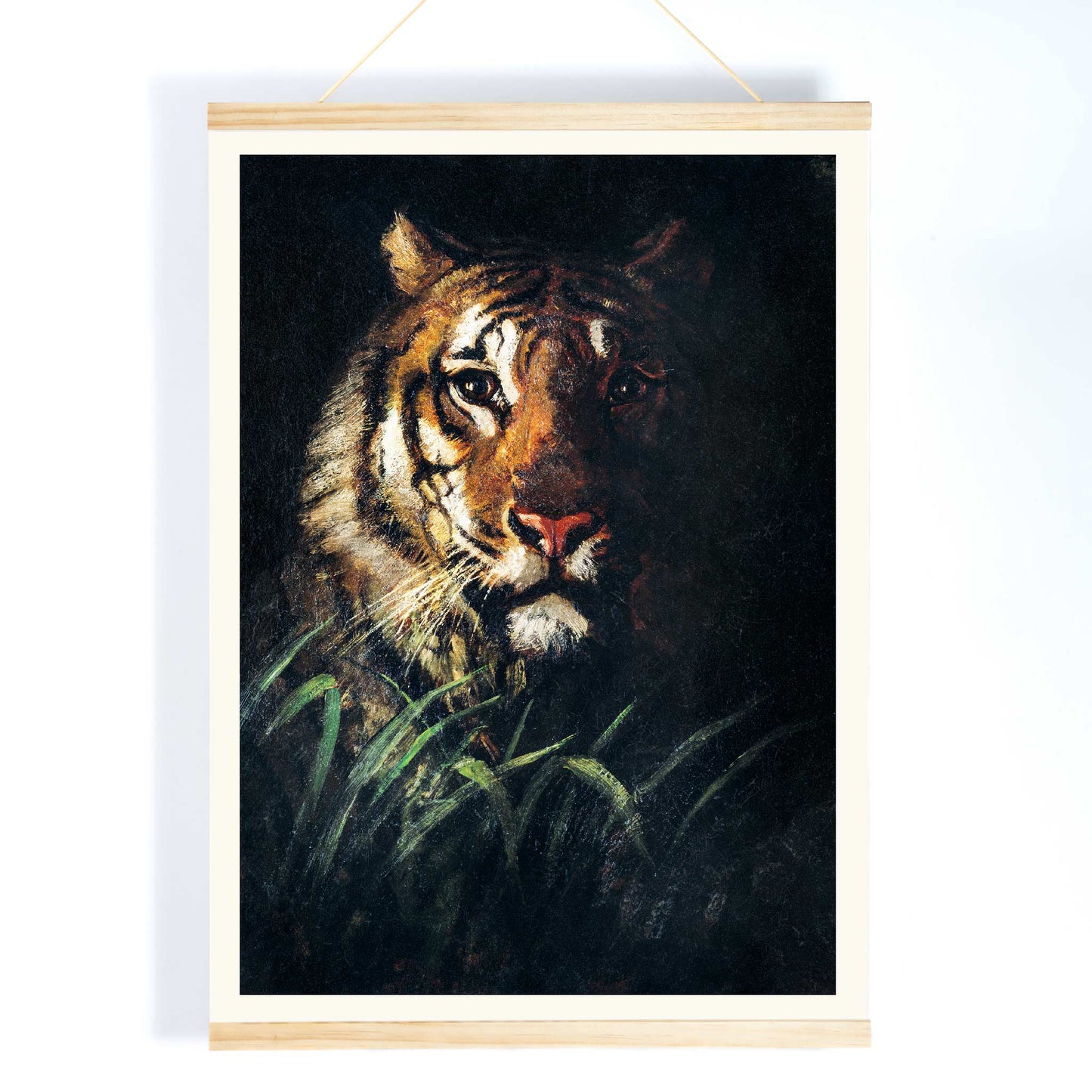
Created in 1911, Tigers Head reflects Thayer's commitment to portraying animals with psychological depth rather than as mere specimens. At a time when natural history was captivating the public imagination, Thayer sought to capture the tiger's presence and vitality, inviting viewers to engage with the animal as an individual. This approach mirrored broader cultural shifts toward understanding wildlife with empathy and scientific curiosity.
As a subject for vintage prints, the tiger embodies both the allure of the exotic and the intimacy of close observation, resonating with early 20th-century interests in nature and art.
Style & Characteristics
The artwork centers on the tiger's head, filling the frame with its intense gaze and distinctive striped fur. Thayer employs expressive, painterly brushwork to evoke the animal's texture and energy, using a palette of deep browns, blacks, and subtle greenish tones in the background. The composition is intimate and direct, focusing attention on the tiger's alert expression and the interplay of light and shadow across its face.
The mood is both powerful and contemplative, making this art print a striking choice for animal portrait enthusiasts.
In Interior Design
This fine art print serves as a commanding focal point in spaces such as living rooms, studies, or libraries, especially within classic or modern interiors that appreciate bold animal imagery. It pairs well with natural materials like walnut wood, black metal, and earthy textiles in moss green or tobacco brown, harmonizing with the artwork's palette.
Consider displaying it within a curated animals gallery wall or alongside other works from classic art to create a layered, timeless atmosphere.