


You may also like
-

Danae Poster
Gustav Klimt · 1908 · Luminous Symbolist art print of Danae embraced by golden rain and pattern
Poster from €9 · Framed from €16
-

Water Serpents II Poster
Gustav Klimt · 1907 · Sensual Art Nouveau art print of water nymphs entwined in gold, violet, and coral
Poster from €9 · Framed from €16
-

The Virgin Poster
Gustav Klimt · 1913 · Sensual Symbolist poster of intertwined women drifting in a violet spiral of patterns
Poster from €9 · Framed from €16
-

Judith and the Head of Holofernes Poster
Gustav Klimt · 1901 · Iconic gilded art print of Judith holding Holofernes head in opulent Art Nouveau style
Poster from €9 · Framed from €16


-

"Very nice Posters. The quality is amazing and we received it very quickly !"
-

"A shop to visit absolutely. Huge selection of posters. We spent more than an hour there !"
-

"Perfect to find gift. Price are very good. An they can frame and pack it on site"


About the Artist
Gustav Klimt was a central figure in Viennese Modernism and a cofounder of the Vienna Secession, renowned for transforming painting into a decorative and symbolic art form. By 1907, Klimt’s work was marked by a fascination with myth, allegory, and the interplay between sensuality and spirituality. His art often explored themes of health, fate, and the human condition, reflecting the intellectual climate of early 20th century Vienna.
Collectors interested in famous artists wall art and classic art prints will recognize Klimt’s unique contribution to the era’s artistic innovation and his enduring influence on modern aesthetics.
The Artwork
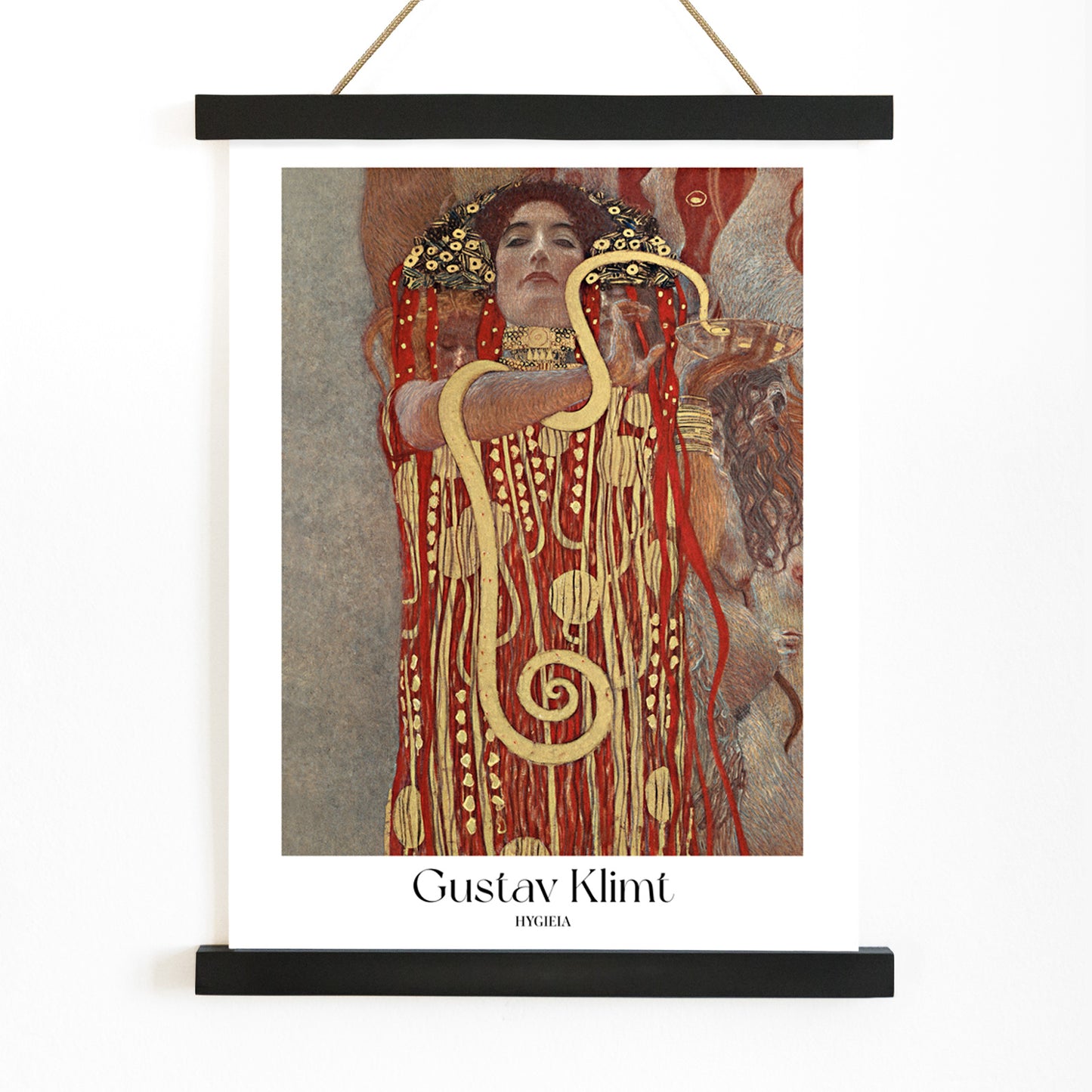
This artwork depicts Hygieia, the ancient Greek goddess associated with health and protection, who became a powerful symbol in both classical and modern contexts. Klimt presents her not as a passive figure, but as a commanding presence, embodying both the promise and the mystery of wellbeing. The inclusion of Hygieia reflects the era’s fascination with medicine, science, and the boundaries between body and spirit.
Created during a period of intense debate about progress and human destiny in Vienna, this piece channels the cultural anxieties and aspirations of its time. It stands as a testament to the way mythological figures were reimagined to address contemporary questions about knowledge and healing.
Style & Characteristics
The composition is dominated by a frontal figure adorned in a richly patterned robe, rendered in deep reds, golds, and earthy browns. A serpent, symbolizing both healing and wisdom, coils beside her, reinforcing the medical and mythological themes. Klimt’s use of flattened perspective and intricate ornamentation creates a luminous, tapestry-like effect that is both opulent and enigmatic.
The artwork’s surface shimmers with decorative motifs, while the overall mood is one of solemnity and allure. The combination of bold color, gold accents, and symbolic imagery is characteristic of Klimt’s Secessionist style, making this a striking example of early 20th century Viennese art. For more works in this vein, explore our red posters and prints.
In Interior Design
This piece serves as a compelling focal point in living rooms, studies, or hallways, especially in interiors that embrace rich textures and layered narratives. It pairs beautifully with walnut wood, brass details, and textiles in burgundy, ochre, or warm neutrals, echoing the artwork’s palette.
Ideal for maximalist, Art Nouveau, or eclectic spaces, this poster can be complemented by cream walls and black frames for a refined, gallery-inspired look. Its mythological and decorative qualities invite thoughtful placement alongside other classic or symbolic artworks.