


You may also like
-

Laurel Tree Poster
Mark Catesby · 1754 · Elegant laurel botanical print with slender branch, glossy leaves, and delicate blooms
Poster from €9 · Framed from €16
-

Balsam Tree Poster
Mark Catesby · 1754 · Graceful balsam tree print with soft pink blossoms and crisp natural history detail
Poster from €9 · Framed from €16
-

Pawpaw Poster
Mark Catesby · 1754 · Graceful pawpaw botanical print with broad green leaves and ripening fruit on ivory ground
Poster from €9 · Framed from €16
-

Pilchard Poster
Mark Catesby · 1754 · Natural history pilchard vintage print pairing a silvery fish with coastal greenery
Poster from €9 · Framed from €16


-

"Very nice Posters. The quality is amazing and we received it very quickly !"
-

"A shop to visit absolutely. Huge selection of posters. We spent more than an hour there !"
-

"Perfect to find gift. Price are very good. An they can frame and pack it on site"


About the Artist
Mark Catesby was an English naturalist and illustrator whose explorations in the American colonies during the early 18th century made a lasting impact on natural history. His seminal work, The Natural History of Carolina, Florida and the Bahama Islands, introduced European audiences to the remarkable biodiversity of North America through detailed illustrations and firsthand observations.
Catesby's dedication to documenting unfamiliar species bridged scientific inquiry and artistic expression, establishing a foundation for botanical illustration as both a scientific and decorative pursuit. His legacy endures in the clarity and elegance of his plates, which continue to inspire collectors and enthusiasts of vintage botanical art.
The Artwork
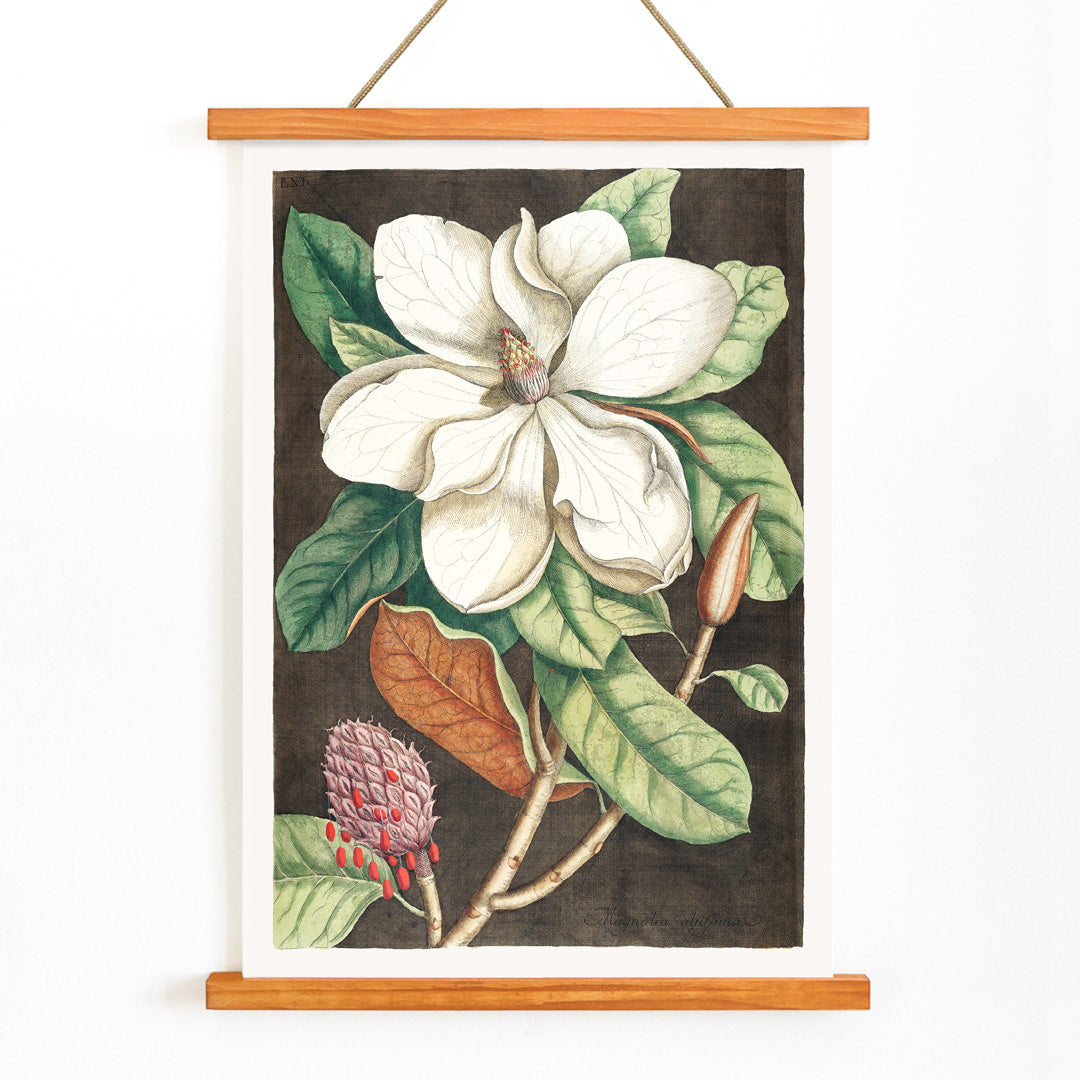
This depiction of Magnolia altissima reflects the Enlightenment era's drive to catalog and understand the natural world. Created at a time when botanical prints served as essential references for scholars, gardeners, and physicians, it provided visual documentation for species that were often inaccessible to European audiences.
Such works were valued not only for their scientific accuracy but also for their ability to convey the beauty and uniqueness of exotic plants. Today, this print embodies the spirit of exploration and discovery, making it a thoughtful addition to any collection of botanical or classic art prints.
Style & Characteristics
The artwork features a single magnolia branch, elegantly isolated against a pale, aged background. The composition is balanced and uncluttered, allowing the viewer to appreciate the plant's structure and details. Fine, precise linework defines the stem and leaves, while subtle hand-applied washes of green and brown add depth and realism.
The creamy white of the magnolia bloom stands out gently, complemented by the soft green foliage and warm brown accents. The restrained color palette and delicate shading evoke a calm, contemplative mood, characteristic of 18th-century natural history illustration. This refined style makes the print suitable for a curated interior or gallery wall, especially when paired with other green toned artworks.
In Interior Design
This botanical print lends a sense of tranquility and sophistication to spaces such as kitchens, dining rooms, hallways, or home offices. Its vertical orientation is ideal for narrow walls, and it pairs beautifully with natural wood furnishings and neutral textiles.
For a cohesive botanical theme, combine this piece with other nature-inspired prints and simple frames. The artwork's subtle tones and elegant composition make it a versatile choice for both traditional and contemporary interiors, adding a touch of historical charm and natural beauty.